
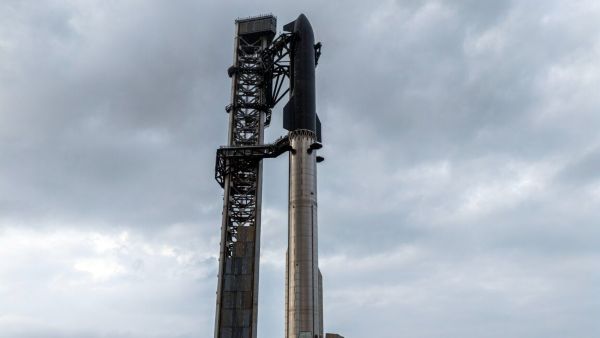
[Digital Today intern reporter Seung-a Yoo] SpaceX will attempt to insert the upper stage into Earth orbit for the first time in Starship’s 14th test flight on Sept. 22. The flight also plans to deploy 26 third-generation Starlink satellites into a real orbit.
On Sept. 15 (all times local), foreign media including tech outlet TechCrunch reported that, subject to regulatory approval, SpaceX will open a 75-minute launch window from 7:15 a.m. Central time on Sept. 22. In the flight, Starship’s upper stage is set to enter an orbit about 275 km above Earth, circle Earth 6 times over about 10 hours and end the mission.
The key to the flight is the first orbital insertion of Starship’s upper stage. SpaceX has invested billions of dollars in the Starship development program and aims in the long term to replace the Falcon 9 and Falcon Heavy with Starship. Elon Musk has said that once Starship can fly reliably several times a week, existing rockets can be retired. He explained that this would save SpaceX engineering and production resources.
Still, the 14th flight will not fully verify Starship’s complete reusability. It will not attempt to catch the upper stage with the launch tower, and the Super Heavy booster will also try a controlled splashdown in the Gulf of Mexico rather than returning to the launch site. SpaceX plans to focus first on orbital insertion and satellite deployment in this flight.
The booster recovery method is linked to problems that occurred in the previous 13th flight. In the July test flight, Super Heavy operated normally during ascent but a problem occurred during re-entry into Earth’s atmosphere after the boostback burn. During the landing burn, only 8 of the planned 13 engines relit, and it ultimately hit the Gulf of Mexico hard. Ahead of this flight, SpaceX applied hardware changes to improve engine filtering performance and software changes to increase relight reliability.
The upper stage showed relatively stable performance in the 13th flight. It failed to reach orbit but carried out a splashdown in the Indian Ocean, and the vehicle did not suffer major damage even though it tipped over in the water. SpaceX later recovered the upper stage and towed it to Texas, and further improved the thermal protection system based on data gained during the flight and recovery.
It added fastening devices to prevent heat-shield tiles from falling off during ascent and reinforced pathways through which plasma could enter behind the tiles. Curved tiles that reduce heating generated in gaps between tiles were also applied in several areas. This also marks the first time that 2 tiles recovered from the 13th flight are being reused on Starship for the 14th flight.
The flight will also launch 26 third-generation Starlink satellites. In the earlier July 13th flight, SpaceX tested the deployment capability of V3 Starlink satellites for the first time, but the satellites were designed then to burn up in the atmosphere about 20 minutes later. This time, it plans to place the V3 satellites into a real orbit and then use their own propulsion to raise the orbit.
If the mission succeeds, it will be the first flight in which Starship reaches orbit while also deploying real Starlink satellites. TechCrunch reported that the flight would be the first Starship mission to generate revenue for SpaceX’s launch business unit. The revenue comes from other business units within the same company, but it means Starship is moving from test flights into revenue missions.
The flight will also be SpaceX’s second Starship test flight since it carried out an initial public offering (IPO) in June. Whether SpaceX can develop Starship to a level where it can put it into orbit, bring it back and reuse it quickly is cited as a key task for the future transition of its launch system.
 Seung-a Yoo
ysah@d-today.co.kr
Seung-a Yoo
ysah@d-today.co.kr