
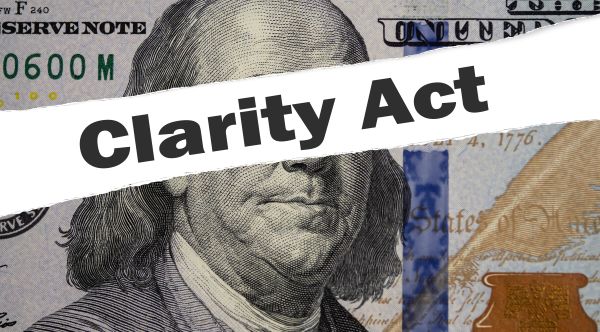
Hopes that the CLARITY bill setting a U.S. crypto market oversight framework will pass this year have faded again. Cointelegraph reported on Sept. 15 that Polymarket put the odds of the bill being enacted this year at 16 percent.
After Republicans proposed amendments strengthening ethics provisions, expectations briefly rose to 35 percent a day earlier. They retreated again as Democratic opposition grew. Senator Mark Warner, who took part in the talks, said the revised ethics provisions were not sufficient. Democrats prepared a counterproposal on Sept. 15 and delivered it to the Republican negotiating team.
Republicans need to secure 60 votes in the Senate to advance the bill. If a procedural vote on Sept. 16 fails, legislation dividing how the U.S. Securities and Exchange Commission and the Commodity Futures Trading Commission share authority to oversee the crypto market could also stall.
A key issue among Democrats is the effectiveness of the ethics rules. Senator Raphael Warnock said a bill that cannot address the possibility of corruption happening in real time should not be advanced. Senator Ruben Gallego also said he was very dissatisfied with recent ethics-related proposals and said he would prepare a separate response. Senator Elizabeth Warren's team shared internally an argument that state attorneys general's enforcement authority could be overturned by a White House ethics official's judgment.
Not all Democrats oppose it. Senator Kirsten Gillibrand privately asked fellow lawmakers to support the procedural vote. Senator Cynthia Lummis, however, said President Donald Trump had accepted two core ethics provisions and there was nothing more to give Democrats.
Opposition to the bill continued outside the Democratic Party. A coalition of 18 state attorneys general has already issued an opposing position, and the Indian Gaming Association also asked members of Congress to vote against it. The group argued the bill's proposed changes related to decentralised finance did not address concerns about prediction markets. It also demanded that the bill specify language stating that federal commodities law does not take precedence over tribal or state gaming laws, including the Indian Gaming Regulatory Act.
Banks also said the amendments did not close loopholes allowing stablecoin rewards. Eight banking industry groups said a rewards structure that functions like deposit interest remains intact. They also voiced concern that a regulatory circuit breaker was designed to kick in only after significant deposit outflows had already occurred at regional banks.
The crypto industry, however, urged passage. Summer Mersinger, the Blockchain Association's chief executive, said the industry had made significant concessions to draw bipartisan support. She argued the bill could create clear rules, protect consumers and deter illegal activity, while also preventing crypto jobs, developers and innovation from moving overseas.
 Hyunwoo Choo
cookinpapa@d-today.co.kr
Hyunwoo Choo
cookinpapa@d-today.co.kr