
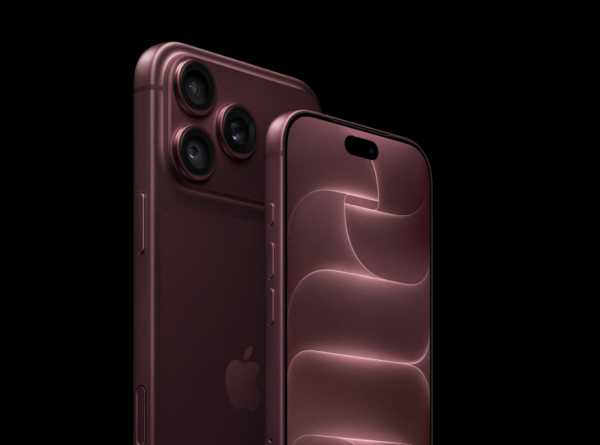
[DigitalToday reporter Jinju Hong (홍진주)] Apple’s iPhone 18 Pro Max and Samsung Electronics’ Galaxy S26 Ultra are large-screen flagships with similar display size and price, but actual buying criteria are narrowing to differences in cameras, operating systems and ecosystems.
On Sept. 10 local time, tech outlet Engadget compared the competitive landscape of the two products and said choice based on user preferences matters more than performance gaps.
Both are non-foldable flagships with 6.9-inch screens. Their designs are not very different. The iPhone 18 Pro Max keeps rounded corners, while the Galaxy S26 Ultra opts for a more linear shape. The rear materials also differ. The iPhone uses a combination of aluminium and glass, and the Galaxy uses a front-glass design.
In portability, the Galaxy is assessed as ahead. The Galaxy S26 Ultra weighs 214 grams, lighter than the iPhone 18 Pro Max at 249 grams. It is also thinner at 7.9 mm versus the iPhone’s 8.75 mm. The numerical differences are not large, but they can be felt during prolonged use.
The displays are in a similar class. The iPhone supports a 2,868 by 1,320 OLED display with a 120 Hz refresh rate and peak brightness of up to 3,000 nits. The Galaxy offers a 3,120 by 1,440 AMOLED display with a 120 Hz refresh rate. The resolution difference was assessed as not large in actual use. Brightness, which affects outdoor visibility, is higher on the iPhone. The Galaxy is around 2,600 nits.
Differentiation also comes from additional features. The Galaxy S26 Ultra includes an S Pen and highlights usability for writing and notes. By contrast, the iPhone has models separately designated for Apple Pencil use. Unlock methods also differ, with the iPhone using Face ID and the Galaxy applying in-display fingerprint recognition. In the front design, the iPhone keeps a smaller Dynamic Island, while the Galaxy chose a punch-hole camera.
The biggest battleground is the camera. The iPhone 18 Pro Max uses 48-megapixel sensors for all three cameras: wide, ultra-wide and telephoto. The key change this year is a variable aperture on the main camera. Unlike most smartphones with fixed apertures, it can mechanically adjust the aperture, widening creative options when shooting. Engadget said the feature "opens up the kind of creative control previously only possible on dedicated cameras."
The Galaxy S26 Ultra differentiates in another direction. Its main camera uses a 200-megapixel sensor, and the ultra-wide is 50 megapixels. The difference is especially pronounced in telephoto. The Galaxy includes two telephoto lenses for 3x and 5x zoom, while the iPhone provides one 4x telephoto lens. That makes the Galaxy more advantageous for high-magnification shooting.
For video, the Galaxy supports 8K, while the iPhone maintains 4K at 120 frames per second, HDR and Dolby Vision. The 8K feature was also assessed as something most users do not use often, but is good to have.
Battery and charging performance do not differ much. Both phones have batteries around 5,000 mAh and were introduced as able to charge to 50 percent in about 15 minutes with a 60 watt charger. That was described as sufficient for a day’s use.
It is still hard to be definitive on the performance race. The Galaxy S26 Ultra uses a 3-nanometre Snapdragon 8 Elite Gen 5. In some tests it outperformed Apple’s A19 Pro. The iPhone 18 Pro Max uses the A20 Pro, Apple’s first 2-nanometre chip. Actual perceived performance and power efficiency still need more real-world verification. Memory is 12 GB or 16 GB on the Galaxy depending on storage, while the iPhone has 12 GB across all models.
On pricing, in the United States both start at $1,299 (about 1.75 million won) for 256 GB models. In that structure, the user environment is likely to decide purchases more than performance itself. The iPhone 18 Pro Max was presented as a more natural choice for users who also use AirPods or an Apple Watch. The Galaxy S26 Ultra aligns with demand for better zoom performance, the S Pen and Android’s flexibility. Engadget concluded that with either choice, users can handle basic tasks without difficulty.
 Jinju Hong
hongjj@d-today.co.kr
Jinju Hong
hongjj@d-today.co.kr