
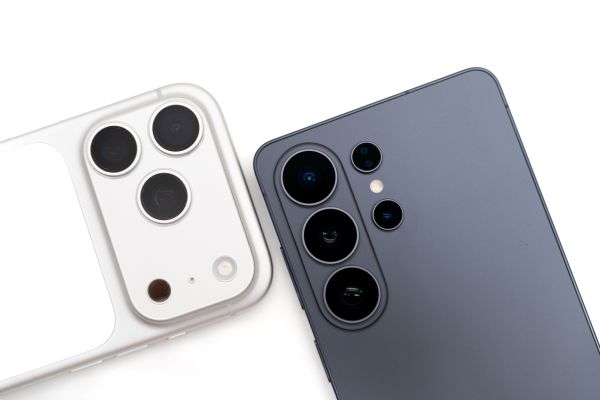
More than 8 in 10 smartphones sold in the European Union are failing to properly comply with rules requiring disclosure of information on repairs and replacement parts. One year after the EU put the rules in place to expand the right to repair smartphones, many manufacturers are being criticised for offering only perfunctory information.
The online media outlet Gigazine reported on Sept. 8 that Right to Repair Europe, a civic group calling for expanded right-to-repair measures, said 82 percent of 2,334 smartphone models it examined in the EU did not properly provide the required repair information.
The EU requires smartphones sold in the bloc to clearly disclose information related to repairs and replacement parts. Smartphones must carry an energy label that allows consumers to check not only energy efficiency but also repairability. Through the label or a linked information page, consumers must be able to check repair procedures and replacement parts prices.
Apple's iPhone 17 was cited as an example of relatively faithful compliance. The iPhone 17 energy label shows an A energy efficiency rating, 41 hours of battery life, a B drop-resistance rating, a C repairability rating, 1,000 charging cycles until battery capacity falls to 80 percent of its initial level, and an IP68 rating.
Scanning the QR code on the label takes users to an EU device information page. A link to Apple's repair information page is also provided at the bottom of that page.
The problem is that only a small number of products made it easy for consumers to check actual repair information. Among the models surveyed, only 18 percent provided a page link that allowed immediate access to repair procedures and replacement parts prices. The remaining 82 percent had no related link or had blank information, and even when information was provided, it was often registered in ways that made it difficult for consumers to use.
The China-made smartphone "Oukitel WP35 Pro" was cited as a representative problem case. The device displayed an A repairability rating, but the link registered at the bottom of its information page did not actually work, the survey found. In the product information sheet, all 3 fields provided for entering a URL were left blank.
There were also cases that formally met the rules. Right to Repair Europe said about 8 percent of the models surveyed registered only meaningless information such as telling users to "check the manual" instead of providing specific repair information. About 5 percent provided links to e-commerce sites such as Temu or AliExpress. Critics said this is far from the purpose of the rules, which is to help consumers check repair procedures and replacement parts prices.
Right to Repair Europe also argued that there are loopholes not only in manufacturers' disclosures but also in the process of managing and supervising the rules. It said blank fields in submitted data should be easy to detect, but in practice thousands of empty entries are being allowed through.
The group urged market surveillance authorities to devote more resources to checking whether manufacturers comply with the rules. It said authorities should check not only whether information is submitted but also whether links work and whether consumers can easily find the information they need.
Even companies that comply with the rules were criticised for insufficient accessibility. Right to Repair Europe said some manufacturers, including Apple and Samsung Electronics, provide related information, but consumers must click through multiple steps on those sites to find repair information or replacement parts information. It also questioned whether consumers considering a smartphone purchase would actually go through such a complex process to check repair information.
The survey shows that smartphone repair information disclosure remains largely formal even a year after the EU's ecodesign-related rules took effect.
Repairability and disclosure of parts information are key for consumers to compare product lifespan and maintenance costs when buying. In practice, however, broken links, blank fields and low-utility guidance are being repeated, and the intent of the rules is not being properly implemented. The next focus is expected to be on improving how manufacturers provide information and on how much the market surveillance system will be strengthened after failing to filter out broken links and blank submissions.
 Jinju Hong
hongjj@d-today.co.kr
Jinju Hong
hongjj@d-today.co.kr