
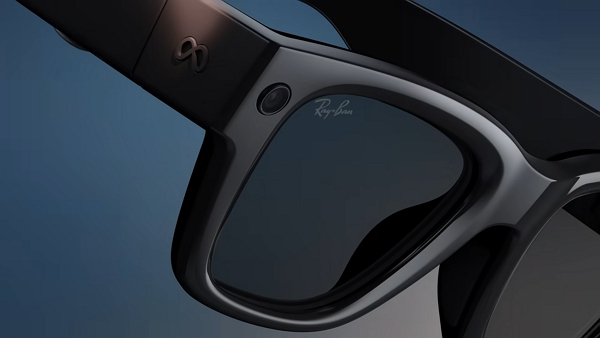
[DigitalToday reporter Jae-won Choi] U.S. police and federal agencies are on guard against Meta smartglasses equipped with cameras, viewing them as a new security risk at detention and police facilities. Because they resemble ordinary glasses, recording can be hard to detect, raising concerns that interior layouts or police movements could be exposed outside the facility.
On Sept. 8 (local time), Decrypt reported that the New York Police Department's counterterrorism bureau, in an internal memo in January, defined Ray-Ban Meta smartglasses as a security and counterintelligence threat. It directed thorough inspections of glasses brought into inmate cells. It cited the risk that covertly recorded footage could reveal cell layouts, surveillance camera locations and the way police patrol and protect facilities.
A real case has also been confirmed. In July last year, TikTok posted a video filmed with smartglasses inside a South Carolina detention facility that was undergoing a federal safety review. The footage included cells and shower and dining areas, as well as inmates who appeared unaware they were being recorded.
Similar warnings spread to the Department of Homeland Security's joint counterterrorism assessment team and fusion centers in Maine, New York, Virginia, Tennessee and San Diego, among others. The Maine fusion center warned that if some smartglasses use AI and facial recognition software, it could lead to exposure of police officers' identities.
Federal agencies have also moved to tighten internal controls. In August, U.S. Immigration and Customs Enforcement notified employees that smartglasses are considered body cameras and cannot be worn in federal workspaces. It judged that sensitive information could be unintentionally recorded, stored or transmitted.
 Jae-won Choi
ittt_0801@d-today.co.kr
Jae-won Choi
ittt_0801@d-today.co.kr