
[DigitalToday reporter Chi-gyu Hwang] PRIBIT AI said it has announced an execution strategy as part of its push to change its business identity from a security company to an AI governance and risk control company, after changing its name in July for that purpose.
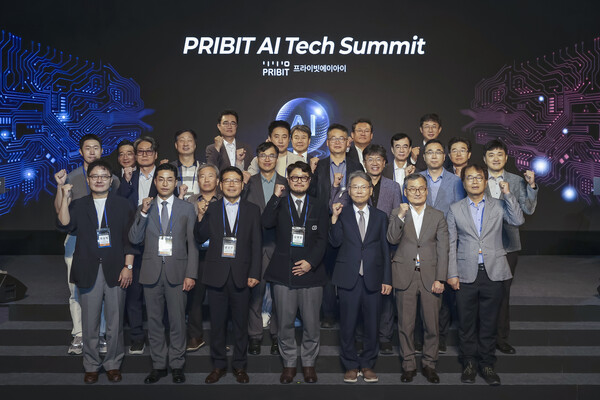
PRIBIT AI held the 'PRIBIT AI Tech Summit' at Banyan Tree Seoul on Sept. 4. It stressed how the scope of risks companies must manage is changing in the AI era and introduced PRIBIT AI's business direction and technology strategy to respond.
The company said that when AI agents begin using internal data, APIs and work systems, risks can emerge that differ from existing cyber attacks. It cited excessive data access, unauthorized tool calls, the export of critical information and incorrect automatic execution.
PRIBIT AI said it views challenges from adopting AI from the perspective of risk management across overall corporate operations, rather than responding to individual security threats. It said companies need a system that sets principles and permissible boundaries for using AI and can continuously verify whether data access, permissions and execution processes follow set standards.
PRIBIT AI also introduced on-device AI threat detection and response technologies at the event, as well as a phased adoption strategy for the N2SF national network security system for public institutions.
PRIBIT AI CEO Young-rang Kim (김영랑) said, "More important than introducing AI itself is having a system that lets a company decide for itself how far it will allow it and under what conditions it will run." She said, "Sovereign AI also does not mean not using external AI. It is the concept that even when using external technology, the company must have final control over data, models and execution."
She added, "PRIBIT AI will focus not on blocking AI, but on creating an execution environment that can broaden its use while controlling risks." She said, "Through this, we will expand our role beyond a security technology company and grow into a company that supports corporate AI governance and risk management."
 Chi-gyu Hwang
delight@d-today.co.kr
Chi-gyu Hwang
delight@d-today.co.kr