
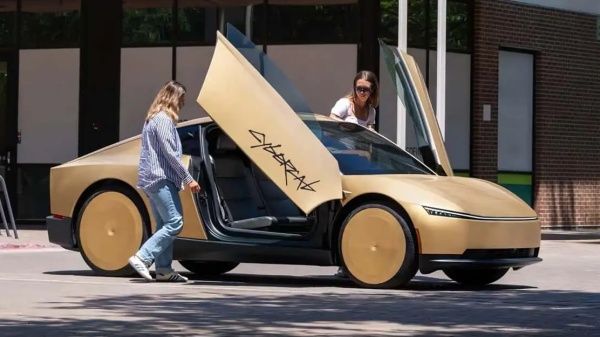
Tesla has begun paid robotaxi operations of its two-seat electric vehicle, the Cybercab, in Austin, Texas. On Sept. 4 local time, EV outlet InsideEVs reported the vehicle has no steering wheel or pedals and can currently be ridden only in Austin.
The service is Tesla's first real-world offering of the robotaxi concept it has signalled for years. The scale is still limited. Tesla did not disclose how many Cybercabs are operating for the general public, but recently released Texas vehicle registration data showed 45 Cybercabs registered. Tesla operates about 250 driverless taxis across 6 cities overall. Waymo operates about 4,000 in 14 cities.
The usage rules are also strict. Children under 13 cannot ride in a Cybercab. Minors aged 13 to 17 must be accompanied by an adult. Rides can be requested only for the account holder, meaning a guardian cannot request a car separately for a child. By contrast, Model Y robotaxis allow children from age 8 to ride when accompanied by an adult.
The Cybercab seats 2 and has 20.2 cubic feet of rear trunk cargo space. It can carry 2 checked bags and 2 carry-on bags, and can also load 1 folded large stroller and 1 folding wheelchair, Tesla said. At the launch event, Tesla said 80 percent of robotaxi rides involved 2 passengers and disclosed that this was why it adopted a two-seat layout.
The doors open automatically when a passenger approaches and can also be opened via an app. Inside, the doors can be opened using the central touchscreen or buttons on each door. Each seatback can be adjusted, but the seat bases move forward and back together. It automatically applies cabin temperature and streaming account settings based on previous ride history and deletes them from the vehicle when the trip ends. The AI assistant Grok is also integrated.
The cabin is equipped with an interior camera and interior radar. The camera checks cleanliness and lost items, and the radar detects occupants to determine how to deploy airbags. Autonomous driving is performed using only 8 exterior cameras.
Chief vehicle engineer Eric Early (에릭 얼리) described the Cybercab as the lightest and most efficient vehicle Tesla has made. Its drag coefficient is below 0.2.
According to documents submitted to the U.S. Environmental Protection Agency, the vehicle produces 219 horsepower from a front-mounted electric motor and uses a 48 kilowatt-hour battery pack. Its curb weight is 3,113 pounds. It controls brake calipers with electric actuators instead of hydraulic brakes, and uses a method that colors the material during molding rather than applying paint to the exterior.
 Hyunwoo Choo
cookinpapa@d-today.co.kr
Hyunwoo Choo
cookinpapa@d-today.co.kr