
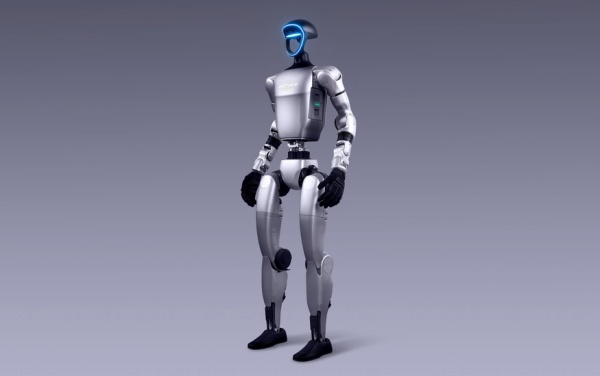
China's robot industry is moving away from a race for flashy demonstrations and entering a commercialisation stage in which robots are deployed at scale at industrial sites.
On Aug. 19, the South China Morning Post reported that at this year's World Robot Conference (WRC), which opened in Beijing, usability and profitability emerged as key topics, rather than performances by humanoid robots.
Humanoid robots playing table tennis or drums drew visitors' attention at the venue, but the industry mood has changed. Pressure has grown to deliver results in real operating environments, after two years of publicity-focused demonstrations. Xu Xiaolan (쉬샤오란), president of the China Electronics Society and former vice minister of the Ministry of Industry and Information Technology, said the embodied intelligence industry has entered a "critical turning point".
Xu said the core goal over the past two years was to "push applications into the real world" and that use cases are emerging in public services, logistics, manufacturing, healthcare and emergency response. That shows the benchmark in the humanoid robot race is shifting from mobility performance itself to deployability on the ground.
Production is expanding quickly. Morgan Stanley said China accounted for 97% of global humanoid robot shipments in the first half of this year. Shipments are expected to rise from about 12,000 units last year to 50,000 in 2026 and 446,000 in 2030. A shift to mass production is not just about expanding output. Morgan Stanley said competitiveness can be proven only by delivering "not only mobility performance but also reliability, autonomy and economic value" in real operating environments.
Market expectations remain high. More than 300 robot companies took part in this year's World Robot Conference, up 36% from last year. On the same day, industry leader Unitree Robotics listed on Shanghai's STAR Market and its shares jumped 460% on the first trading day. TrendForce said Unitree would be an "important case study" to gauge commercialisation of humanoid robots in China.
Profitability remains a task. Unitree's net profit in the first half of this year, excluding one-off gains and losses, was 244 million yuan (about 50.6 billion won), down 19% from a year earlier. TrendForce said major manufacturers are facing temporary difficulties in costs and profitability. That means commercialisation could be constrained if they fail to secure economic viability even after building large-scale production capacity.
On the demand side, product completeness still needs further verification. In a Morgan Stanley survey, 62% of companies said there was potential to introduce humanoids between 2025 and 2027, but only 23% said they were satisfied with existing products. Reliability, functionality and price competitiveness were cited as key obstacles to full-scale adoption.
Chinese government support is also shifting toward real-world deployment. At this year's event, 49 state-owned enterprises under the central government participated across 12 fields. Authorities also plan to set up a robot innovation consortium of central state-owned enterprises to support joint technology development and commercial deployment. Policy emphasis appears to be moving toward creating real operating environments rather than laboratory achievements.
The external environment is not favourable. The U.S. Federal Communications Commission (FCC) last month banned imports of new robot devices such as humanoids, quadruped robots and robot vacuum cleaners. Existing approved robots were excluded. Against this backdrop, the Chinese side launched a "Global Robot Application Exploration Program" at the event, highlighting global cooperation. The programme supports trial operations by providing mass-produced robots to overseas innovation teams.
Xu said global companies and researchers should work together to solve challenges in parts, software, algorithms, data, robot manufacturing and applications. He proposed building an industry ecosystem that is "open, cooperative and mutually beneficial". The next competition for China's robot industry is increasingly likely to be decided not by demonstration videos but by on-site deployment, cost structures and product completeness.
 Seung-a Yoo
ysah@d-today.co.kr
Seung-a Yoo
ysah@d-today.co.kr