
Discussions on designating Jeonbuk as a "third financial hub" have entered a full-scale phase. Financial authorities have finalised an evaluation plan to determine whether Jeonbuk should be designated as a financial hub. They will conduct document reviews and on-site inspections in the third and fourth quarters this year, then deliberate within the year on whether to grant the designation. Expectations are also rising as four major financial holding groups, centred on the National Pension Service, move to build bases in Jeonbuk Innovation City.
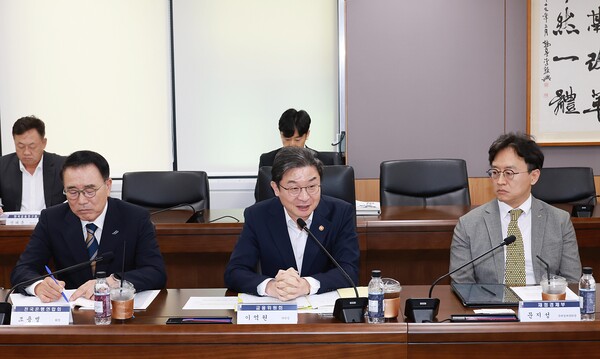
On Aug. 19, the Financial Services Commission held the 53rd Financial Hub Promotion Committee meeting and reviewed and finalised the "Jeonbuk financial hub designation evaluation plan". A research institution and an evaluation panel will conduct document reviews and on-site inspections in the third and fourth quarters under the plan. The committee plans to deliberate within the year on whether to designate Jeonbuk as a financial hub based on the research institution's evaluation results.
The discussion over designating Jeonbuk as a financial hub has effectively moved into an evaluation stage. Jeonbuk Special Self-Governing Province submitted its "Jeonbuk financial hub development plan" to the commission on Jan. 29. The commission ran a tender for a research service from February to April and selected a research institution in May. The institution formed an evaluation panel of 12 experts in areas including economics, finance and law, organised into general, finance and development subcommittees. The committee finalised an evaluation plan on the day, including evaluation factors, indicators and scoring weights.
The evaluation will examine factors including the potential to develop into an international financial hub, the current state of domestic and overseas financial institutions and related industries and the possibility of attracting them in the future. It will also review management, education and living conditions, and the ease of securing skilled personnel. The feasibility of the development plan, its effects on revitalising the national and local economy, consistency with the city's master plan and the views of local residents and businesses are also subject to evaluation.
◆ Four major financial holding groups also expand bases in Jeonbuk
Jeonbuk is increasing the concentration of private financial firms centred on Jeonbuk Innovation City, where the National Pension Service is located. The four major financial holding groups - KB, Shinhan, Woori and Hana Financial - have also built bases related to asset management and capital markets.
KB Financial opened the "Jeonbuk KB Financial Town" in Jeonbuk Innovation City on July 8. It is an asset management-focused financial base that brings together key group affiliates including KB Kookmin Bank, KB Securities and KB Asset Management. The National Pension Service has also assessed the KB Financial Town as a case showing that efforts to build Jeonbuk's financial ecosystem are becoming visible.
Shinhan Financial held a launch ceremony for building a "Jeonbuk financial hub" in Jeonbuk Innovation City on Feb. 24 and, as the first step, opened a Jeonju headquarters for Shinhan Fund Partners. When it opened, 33 employees were stationed there to handle work related to National Pension Service investment assets. Shinhan Financial plans to use this as a starting point to concentrate the full value chain of capital market business - including asset management, custody and risk management - in Jeonbuk Innovation City and build a comprehensive asset management hub linked to the National Pension Service.
Woori Financial also opened the "Jeonbuk Woori WON Financial Town" in Jeonbuk Innovation City on July 29. Woori Financial plans to operate it as a regional financial base to strengthen its strategic partnership with the National Pension Service, bring together group infrastructure and expand productive and inclusive finance in the Jeonbuk and Jeonju areas.
Hana Financial is also pushing to build a base in Jeonbuk. In April, it said it would establish a "Hana Financial capital market One-Roof Center" in Jeonbuk Innovation City that integrates functions including asset management and alternative investment management, securities, bank custody sales and a call centre. It plans to assign about 150 employees initially and expand personnel and functions later through measures including hiring local talent.
The expansion of financial holding groups' bases in Jeonbuk differs in nature from a simple expansion of bank branch networks. That is because much of the functions each group is concentrating in Jeonbuk focus on capital market operations that connect to the National Pension Service's fund management, including asset management, custody, securities and alternative investments.
In particular, the evaluation items include the status of domestic and overseas financial institutions and related industries and the possibility of attracting them in the future, and the ease of securing skilled personnel. That is seen as likely to have a positive impact.
◆ Intensifying competition among global financial hubs makes qualitative growth a key issue
The discussion on designating Jeonbuk as a financial hub comes as competition among global financial hubs grows more intense. In the seventh basic plan for financial hubs, the Financial Services Commission assessed that competitive dynamics among global financial hubs are changing as traditional financial hubs undergo restructuring while emerging hubs rise at the same time.
It said India’s GIFT City, Ho Chi Minh City in Vietnam and Astana in Kazakhstan are seeking to attract global financial institutions and investors based on tax benefits and specialised strategies such as fintech and digital assets.
As a policy vision for the next 3 years in response, the commission presented "Financial Korea leading global financial markets". It will pursue four tasks: boosting financial industry innovation, building global-level financial infrastructure, revitalising capital markets and strengthening support for financial hubs. In the capital markets area, it focused on improving access for overseas investors and advancing the asset management industry.
It is also notable that the government pointed to limits in its existing regional financial hub policy. The commission assessed that discussions had focused on expanding physical requirements such as relocating public institutions and building and expanding financial centres, and that this had not sufficiently expanded into securing substantive investment and contributing to local economies.
It assessed that even in Busan, the development of the financial hub has not visibly translated into nearby local economic development, and that outflows of manpower and difficulties in attracting foreign firms continue.
Jeonbuk, too, is expected to face a key test of competitiveness: whether it can go beyond simply increasing financial firms' bases and, centred on the National Pension Service, create a real concentration of asset management, investment and skilled personnel.
◆ A new financial hub after Seoul and Busan
South Korea currently has 2 financial hubs: Seoul and Busan. The government designated Seoul and Busan as financial hubs in January 2009 and announced it in the official gazette in January 2010. In the seventh basic plan for financial hubs, it decided to pursue tailored strategies that reflect regional characteristics by classifying Seoul as "comprehensive finance" and Busan as "specialised finance".
Seoul will focus on activating fintech support policies and strengthening human and physical infrastructure in response to changes in the digital finance industry. Busan plans to expand financial hub infrastructure and strengthen its status as a digital financial hub by increasing linkages with regional industries.
If Jeonbuk is ultimately designated, it would be the first case of adding a new financial hub after Seoul and Busan. With the four major financial holding groups expanding bases and an asset management ecosystem centred on the National Pension Service taking shape, attention is focused on whether Jeonbuk's "third financial hub" plan can become a reality through deliberations within the year.
The Financial Services Commission said, "There is a need to speed up substantial development of financial hubs, including continuously innovating the financial industry based on competitiveness in the IT industry." It added, "The future direction of financial hub policy will boost continued financial industry innovation so it can proactively respond to a changed financial environment due to the rapid digitalisation of finance."
 Lee Ji-young
ljy@d-today.co.kr
Lee Ji-young
ljy@d-today.co.kr