
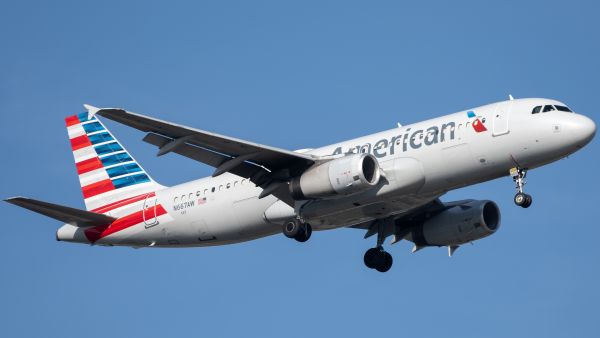
American Airlines is expanding seatback entertainment screens that it had once scaled back. It aims to strengthen the passenger experience by moving away from delivering content mainly to personal devices such as smartphones and tablets, and instead combining seatback screens with onboard internet.
Business Insider reported on Aug. 18 that American Airlines said it plans to install seatback screens on about 800 single-aisle aircraft.
The plan covers newly introduced Airbus and Boeing aircraft as well as retrofits of existing planes. New aircraft equipped with screens will be introduced from 2028. Retrofits of existing aircraft will also begin in 2028 and run into the early 2030s.
The new seatback screens will offer a range of content including movies, TV programmes, games and music. They will also support Bluetooth connections so passengers can use their own wireless earphones or headphones.
The decision reverses American Airlines' personal-device-focused in-flight entertainment strategy that it has maintained for nearly the past decade. The airline has reduced seatback screens and expanded streaming of onboard content to passengers' smartphones or tablets. It decided to expand seatback screens again as passenger preferences and the onboard internet environment have changed.
The company said customer usage patterns have changed since the COVID-19 pandemic. It said it believes demand has grown, especially among younger generations, to use multiple devices and larger screens even while travelling.
Improvements in the onboard internet environment also influenced the strategic shift. American Airlines said low Earth orbit satellite technology is significantly changing the range of services possible onboard. American Airlines currently offers free Wi-Fi to loyalty programme members with sponsorship from AT&T. From 2027, it also plans to install SpaceX's Starlink service on more than 500 single-aisle aircraft.
The company ultimately aims to expand onboard digital services by offering seatback screens, passengers' personal devices and high-speed internet at the same time. It said the strategy is not simply to revive screens that had disappeared, but to tie onboard connectivity and entertainment into a single service experience.
It is also significantly increasing premium seating. About 25 percent of seats on American Airlines' single-aisle flights are currently premium seats, but the company plans to raise that share to about 40 percent within the next few years.
That aligns with a trend of intensifying competition across the airline industry for premium services aimed at high-income travellers. American Airlines is also focusing on strengthening premium seats and services as it lags Delta Air Lines and United Airlines in profitability.
American Airlines is introducing Bollinger champagne and Lavazza coffee, and is also expanding premium lounges at Dallas-Fort Worth and New York's JFK International Airport.
Nate Piper (냇 파이퍼), American Airlines' chief financial officer, said in a recent earnings announcement that premium demand is rising faster than other business segments and may remain relatively resilient amid economic uncertainty.
The airline plans to apply a higher share of premium seating than before to new aircraft as well. The shift in American Airlines' strategy can be summed up as moving from 'in-flight entertainment watched on personal devices' to 'seatback screens plus high-speed internet plus premium services'.
With the Starlink rollout in 2027 followed by expanded seatback screens from 2028 across about 800 single-aisle aircraft, attention is on how much American Airlines can narrow its service gap with rivals such as Delta Air Lines and United Airlines.
 Jinju Hong
hongjj@d-today.co.kr
Jinju Hong
hongjj@d-today.co.kr