
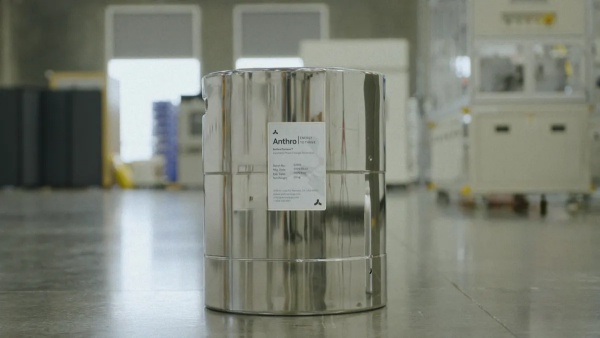
U.S. battery materials company Anthro Energy has broken ground on an electrolyte production plant in Louisville, Kentucky, with annual capacity of 25 GWh. The plant is large enough to supply more than 300,000 electric vehicles and aims to build a U.S. battery materials supply chain that lowers reliance on China.
TechCrunch reported on Aug. 18 local time that Anthro Energy has started building an electrolyte production facility in Louisville. The company is targeting a 2028 start-up, and the plant is expected to have annual electrolyte capacity of 25 GWh.
The core of the investment is to build a U.S. battery materials sourcing network rather than simply expand production capacity. The U.S. battery industry is accelerating efforts to secure material suppliers outside the influence of Chinese companies.
David Maccanick (데이비드 매캐닉), Anthro Energy co-founder and CEO, said the company plans to provide U.S. high-spec battery customers with a China-independent supply chain and a material source without issues under FEOC (Foreign Entity of Concern) rules once the plant is operating.
Louisville's location is also cited as favorable for supply chain expansion. Maccanick said about 70 percent of U.S. battery production facilities can be reached within a 12-hour drive from the area. The strategy is to win customers based on geographic advantages close to key battery manufacturing hubs.
Support from the federal and state governments also backed the project. The U.S. Department of Energy provided $24.9 million under the bipartisan infrastructure law, and $18.4 million in investment tax credits was also provided under the Inflation Reduction Act. Kentucky will support tax incentives worth $2.3 million on the condition that 110 permanent jobs are created.
The Louisville plant will be designed to produce multiple types of electrolytes. Anthro Energy plans initially to produce electrolytes in various compositions to meet customer needs, then raise over the long term the share of production for its polymer electrolyte, Proteus.
Proteus is designed to be applied without major changes to existing battery production lines. The company said it can initially support customer validation by producing other companies' electrolyte formulations, then switch to Proteus production once customers complete validation of their own materials.
Anthro Energy presents Proteus as a bridging technology for moving to all-solid-state or semi-solid-state batteries. All-solid-state batteries are next-generation batteries that use solid electrolytes instead of conventional liquid electrolytes. They are expected to raise safety by reducing the use of flammable liquid electrolytes while increasing energy density. They may also help reduce dendrite issues that can arise inside batteries by forming a solid barrier between electrodes. All-solid-state batteries still face many challenges, including mass production, durability and costs.
Anthro Energy said its electrolyte manufacturing method can lower these commercialization barriers. The company's electrolyte flows into the battery cell like a liquid during manufacturing, permeates the electrodes and then solidifies. This structure binds components inside the battery together.
Maccanick claimed cells made using this method can be 10 to 15 times stronger than cells using conventional liquid electrolytes, depending on the electrolyte composition. He said he expects the technology could be used not only for electric vehicles but also in various areas such as drones and robots.
There are many cases in which battery materials companies struggle to move from laboratory or small-scale production to large-scale mass production. Anthro Energy expects the federal government support will help it get past the so-called valley of death.
Maccanick said battery materials companies struggle because entering large applications requires large-scale production capacity, but securing large-scale production facilities requires customers first. He said Energy Department support can resolve much of this sequencing problem.
The plant groundbreaking is seen as an investment targeting two trends at once: building a de-China supply chain in the U.S. battery industry and commercializing next-generation batteries.
The actual outcome will depend on how much customer validation the company secures before the plant begins operations in 2028 and whether it can mass-produce the new material reliably. As the United States seeks to build a battery supply chain that lowers reliance on China, attention is on whether Anthro Energy can secure a foothold in the next-generation battery materials market through its Louisville plant.
 Jinju Hong
hongjj@d-today.co.kr
Jinju Hong
hongjj@d-today.co.kr