
As a U.S. bypass route for Chinese graphite closes, shifting from high tariffs to tax credit requirements, the timetable for Korean anode materials makers to localise synthetic graphite is accelerating. Capacity expansions and the start of long-term supply contracts are concentrated in 2027, and domestic cell makers have limited options to replace Chinese supplies before then.
Industry data show the domestic import unit price for Chinese anode materials continues to fall. The July import unit price for anode materials compiled by the Ministry of Trade, Industry and Energy was $3.8 per kilogram, down 20.0 percent from a year earlier. The July import unit price for natural graphite also fell 12.0 percent to $1.4. Over the two years in which the United States and China traded export controls and high tariffs over graphite, prices of Chinese raw materials imported by South Korea fell instead.
The U.S. International Trade Commission (ITC) ruled in March that Chinese active anode material (AAM) had not materially hindered the establishment of an industry in the United States. Following the ruling, the Commerce Department did not issue anti-dumping and countervailing duty orders. Tariff rates the department had finalised in February — 93.5 percent anti-dumping, 66.82 to 66.86 percent countervailing duties, and a China-wide anti-dumping rate of 102.72 percent — did not take effect, and an attempt to protect U.S. anode materials production through tariffs was blocked at the final stage.
That left only tax credit protection, separate from tariffs. The U.S. Treasury Department and the Internal Revenue Service issued Notice 2026-15 in February, laying out how to calculate prohibited foreign entity-related amounts for the advanced manufacturing production tax credit (45X). For battery components to receive the tax credit, at least 60 percent of direct material costs must not be attributable to prohibited foreign entities such as China in 2026. The share rises by 5 percentage points each year to reach 85 percent in 2030. Cell makers using Chinese anode materials avoid tariffs but lose eligibility for the tax credit.
According to the ministry, as of 2024, 97.6 percent of natural graphite imports and 98.8 percent of synthetic graphite imports were from China. The same data put precursors at 94.1 percent and nickel hydroxide at 96.4 percent. If 45X requirements are applied as they are, anode materials made in South Korea could be classified as below the threshold at the raw-material stage. That is where the incentive comes for three domestic battery makers with cell plants in North America to change procurement sources.
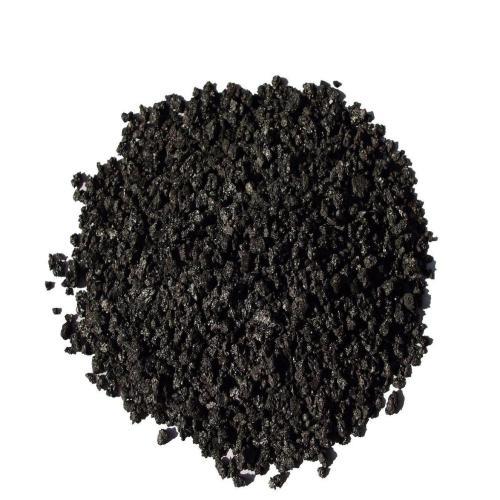
Anode materials account for about 10 percent of battery costs. Natural graphite anode materials are made by processing mined graphite into a spherical shape, while synthetic graphite anode materials are made by graphitising coke and pitch derived from coal or petroleum at high temperatures. For synthetic graphite, power costs in the graphitisation process drive overall costs, and China has maintained a cost advantage by using cheap coal and hydropower.
According to Eugene Investment & Securities, China’s Ministry of Commerce banned exports to the United States of gallium, germanium, antimony and superhard materials in response to U.S. semiconductor regulations, and designated graphite as subject to strict end-user screening. The items included both synthetic graphite and its products, and natural flake graphite and its products.
As China raises the export threshold and the United States begins to scrutinise attribution of material costs, the options left for the domestic industry have narrowed to running its own line that does not pass through China.
Orders have already been secured. Posco Future M signed a long-term supply contract in March with a global automaker for synthetic graphite anode materials worth about 1.0149 trillion won. The contract period runs for 5 years from 2027 to 2032, and it is the company’s largest since it entered the anode materials business in 2011. It is packaged with a natural graphite contract worth about 671.0 billion won signed in October 2025.
The performance, however, has not reflected it. In the second quarter of 2026, Posco Future M’s anode materials unit accounted for 4 percent of companywide revenue, and for synthetic graphite it continued to bear fixed costs with no product shipments. Natural graphite products maintained shipments similar to the previous quarter and posted a small loss. Hana Securities expected the anode materials unit to remain in the red in the third quarter as well.
The gap between orders and shipments stems from the equipment schedule. While shipments under the synthetic graphite contract are set to begin in 2027, the Vietnam plant intended to support it targets mass production in 2028. Posco Future M will invest about 357.0 billion won to break ground on a first-phase plant in the Song Cong 2 Industrial Park in Thai Nguyen province in the second half of this year. It received an investment registration certificate (IRC) from Thai Nguyen province in April and completed approval procedures, and it will respond to additional orders through a second-phase investment. The 2027 volume must be handled by the Pohang line with annual capacity of 8,000 tons.
◆Shipments still pending despite 1 trillion won synthetic graphite order... volumes start in 2027
The natural graphite raw material line is also tied to 2027. A spherical graphite plant being built by subsidiary Futuregraph in the Saemangeum National Industrial Complex at a cost of about 440.0 billion won will produce 37,000 tons a year from 2027 and send it to the Sejong plant. That is enough to make 33,000 tons of natural graphite anode materials. Sejong’s current production capacity for natural graphite anode materials is 74,000 tons a year.
Raw material procurement is split into two tracks. According to Posco Future M, synthetic graphite anode materials use coal-based and petroleum-based coke that utilises coal tar from Posco’s steelmaking process, while natural graphite is sourced by importing ore from Africa and elsewhere through the Posco Group. According to Eugene Investment & Securities, a Posco Group affiliate invested for a 19.9 percent stake in Black Rock Mining, which holds an 84 percent stake in the Mahenge mine in Tanzania. Natural graphite reserves at the mine are estimated at 69.6 million tons. Removing China from the route from ore to spherical graphite to anode materials is a structure completed alongside the start-up of the Saemangeum plant.
While facilities are being built, inflows from China increased instead. Hana Securities data showed July import volume of anode materials was 1,000 tons, up 9.3 percent from a year earlier. Import value over the same period fell 12.6 percent to $3.13 million, reflecting higher volumes and lower unit prices. Prices for Chinese products falling to $3.8 per kilogram continue to reduce incentives for domestic cell makers to change procurement sources.
The period in which the conversion schedule and market flow diverge is at least 1 year and 6 months. Synthetic graphite contract shipments begin in 2027, while mass production at the Vietnam plant is in 2028. In the meantime, the only facility in South Korea capable of producing synthetic graphite is the Pohang line with annual capacity of 8,000 tons, and even that had no shipments in the second quarter. Given a schedule in which U.S. prohibited foreign entity requirements rise by 5 percentage points each year from 60 percent starting this year, the pace at which requirements tighten outstrips the pace at which domestic facilities come on line.
Above all, the next 3 years have become important. Hana Securities cited energy storage systems, minerals vertical integration and next-generation materials as growth drivers for the battery industry. Localising synthetic graphite corresponds to minerals vertical integration, and silicon anode materials targeting mass production in 2028 correspond to next-generation materials. An industry official said, "The direction has been set by orders, and what matters in the remaining schedule is whether we can raise the utilisation rate of domestic facilities before the 2027 contract start."
 Dae-geon Seok
d2dg@d-today.co.kr
Dae-geon Seok
d2dg@d-today.co.kr