
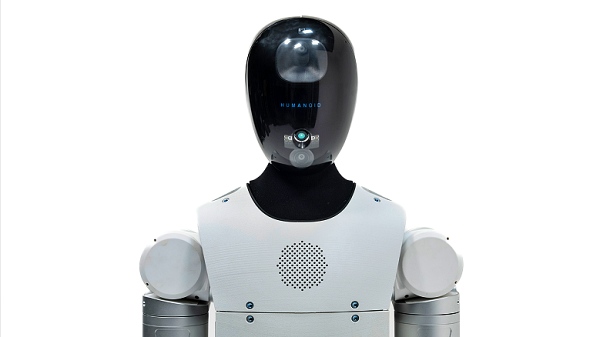
San Mateo County in California has begun working on a plan to manage the commercial use of humanoid robots through a permit system.
Cryptopolitan, a blockchain media outlet, reported on Aug. 12 that the San Mateo County Board of Supervisors unanimously began the process of establishing a local rule requiring workplaces to obtain permits before deploying humanoids for work.
The vote is not a final decision on the regulation. It is the approval of a resolution directing the drafting of an ordinance. The county’s legal and administrative department will prepare a formal ordinance based on it. If the ordinance passes, companies will have to apply for a permit and pay a fee before using humanoids.
The permit plan goes beyond simply approving use. The county is reviewing options to include emergency stop devices, fire-safety measures and ways to track possible job losses. It also includes a plan to use permit fee revenue to fund the purchase of firefighting equipment.
Supervisor Ray Mueller (레이 뮬러), who introduced the measure, stressed that a framework should be set in advance rather than responding after new technology becomes widespread. He said potential problems should be identified before the technology spreads and that a framework should be put in place as soon as possible to prevent it from becoming “out of control.”
San Mateo County is particularly focused on fire risks. Mueller noted that lithium-ion battery fires are increasing in e-bikes, laptops and cars, and said special equipment may be needed to respond to fires involving battery-powered robots. The firefighters’ union voiced the same concern. Spokesman Richard Seguin (리처드 세귄) warned that if such equipment becomes more common in homes and workplaces, battery fires could also rise, adding that battery fires burn hotter and emit more toxic substances, requiring separate equipment.
The discussion comes as robot use has already begun on the ground. In California, robotic arms make coffee at airports and shopping malls, driverless vehicles carry passengers, and wheeled delivery devices transport food. San Francisco-based Tau Robotics rents humanoids for home and office cleaning for $30 an hour, and its website says remote human operators supervise them.
San Mateo County says there is still no complete regulatory system at the California level covering overall humanoid use. It says pre-emptive action at the local level would help encourage the “responsible integration” of new technology. Mueller also stressed the value of data collected during the permitting process. “This data is like gold to public agencies in tracking how robots are used, job losses, fires and safety issues,” he said.
Mueller drew a line, saying the plan is not a measure to ban humanoid technology or prevent its spread. He said public agencies must be able to adapt properly as the technology is introduced in practice. By contrast, Holly Elmore (홀리 엘모어), CEO of Pose AI, viewed the attempt to take risks seriously in a positive light but said no safety device can predict every possible failure. The group supports a temporary pause in frontline AI development.
The next point to watch is how far San Mateo County will go in writing permit requirements and safety obligations into the ordinance. If the final ordinance passes, it could become one of the early cases in the United States in which a local government directly manages the commercial use of humanoids.
 Jinju Hong
hongjj@d-today.co.kr
Jinju Hong
hongjj@d-today.co.kr