
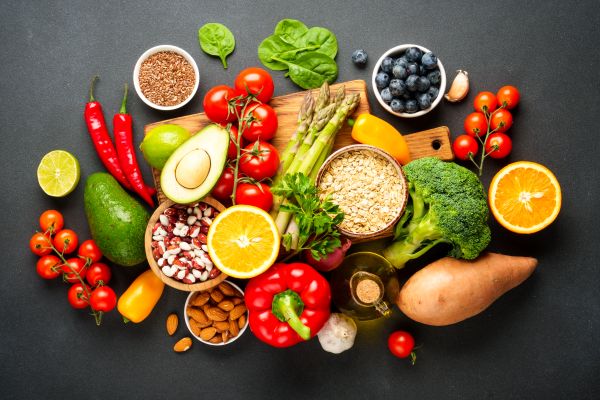
A study has found that it is difficult to guarantee a healthy diet by increasing vegetable production alone, and that the types of vegetables grown and varietal diversity must also be protected.
On Aug. 12, online media outlet Gigazine reported that the researchers pointed out that if vegetable seeds, varieties and wild relatives decline, the choices for putting nutrient-rich and climate change-resilient vegetables on the table will narrow.
The researchers said vegetable shortages have mainly been attributed to production volumes, prices and food culture, but conservation and use of vegetable diversity have received relatively little attention. Vegetables are a major source of vitamins, minerals and dietary fibre, but average intake in each country is about 40 percent below levels recommended for a healthy diet.
The study covered not only species of edible plants but also locally unique and traditional varieties within the same species, as well as wild relatives with genetic traits that can be used for breeding. The researchers combined an agriculture and horticulture crop dictionary, data from the U.N. Food and Agriculture Organization (FAO), a World Vegetable Center list, and materials from sub-Saharan Africa, South and Southeast Asia, Papua New Guinea, the Andes, Mesoamerica and the Amazon, confirming at least 1,482 vegetable species. They said the actual number could be higher if vegetables collected locally but not captured in the literature are taken into account.
A problem is that global production and consumption are concentrated in a few crops. While vegetables such as lettuce, onions and tomatoes are widely grown and consumed worldwide, locally unique vegetables and varieties are losing opportunities for cultivation and consumption due to market standardisation and changes in land use. A review by the researchers of studies over the past 100 years on genetic erosion in vegetables found that 80 percent reported a decline in varieties or genetic diversity.
Risks to wild relatives were also confirmed. When the conservation status of wild relatives linked to 79 species classified by the U.N. Food and Agriculture Organization as major vegetables was checked against the International Union for Conservation of Nature (IUCN) Red List, about 24 percent of assessed species were at risk of extinction. This also means the genetic material needed to develop new varieties is itself declining.
The researchers said that if local vegetables disappear from fields and markets, cultivation methods will also be hard to pass on. They said reduced consumption can further shrink production and distribution, creating a vicious cycle that then reduces accessibility. If diets become skewed toward a small number of vegetables, choices of nutrient-rich vegetables or vegetables suited to local climates diminish, and room to develop varieties that withstand pests, drought and high temperatures also narrows.
The study presented examples. Spider plant, a leafy vegetable eaten in Africa, is highly nutritious and also has the capacity to respond to climate change, but almost no local varieties are stored in gene banks that hold genetic resources. As a result, the seeds available for breeding are limited, making it difficult to develop improved varieties for large-scale production, it said.
By contrast, squash is resistant to drought and high temperatures, with beta-carotene in its orange flesh and micronutrients in its dark green leaves. Multiple varieties are also conserved in gene banks. However, squash is prone to cross-pollination with other lineages at close range, so cultivation plots must be separated to multiply seeds while maintaining the genetic traits of each lineage. This requires large farmland and additional management, raising seed multiplication costs and potentially leading to a shortage of seed volumes that can be used for breeding.
The researchers said, however, it has not yet been confirmed whether eating a greater range of vegetables actually leads to increased vegetable intake or improved health. While stressing the need to conserve vegetable diversity, they left verification of the effects as a separate task.
Maarten van Zonneveld (마르턴 판 조네펠트) of the World Vegetable Center said, "Many of the vegetables we need still remain in the form of traditional varieties and wild relatives," and added, "With climate change progressing, it is urgent to properly conserve them and use them wisely to diversify diets." Against this background, the study shows that vegetable issues should be addressed not only by expanding production but also as a matter of seed conservation and varietal use.
 Yoonseo Lee
yslee@d-today.co.kr
Yoonseo Lee
yslee@d-today.co.kr