
After personally test-driving more than 25 vehicles in China’s car market, a U.S. reporter picked the Zeekr Mix, BYD Seagull, Xiaomi SU7 and YU7, Geely EX5 and Nio-affiliated Firefly as EVs they would actually want to buy. The assessment said the lineup offers strong appeal by segment, not only on price but also on design, software, driving performance and interior layout.
On Aug. 9 local time, EV outlet InsideEV said it selected those models as cars it would want to buy after experiencing various vehicles in China. It said Chinese cars may struggle to enter the U.S. market on a large scale for now, but that many vehicles U.S. consumers are missing stand out on product merit alone.
One of the most eye-catching models was the Zeekr Mix. Unlike a typical electric van, the Zeekr Mix focuses on interior space use and a premium feel. It features three sliding doors, an open pillarless structure, rotating seats and a powered center console with a table.
The tester said the Mix’s cabin felt like a “moving luxury living room.” The explanation said the material quality also felt better than traditional luxury brands such as Audi or BMW. The tester added that the distinctive body shape and an expected high price could limit the model’s ability to secure mass-market sales volume.
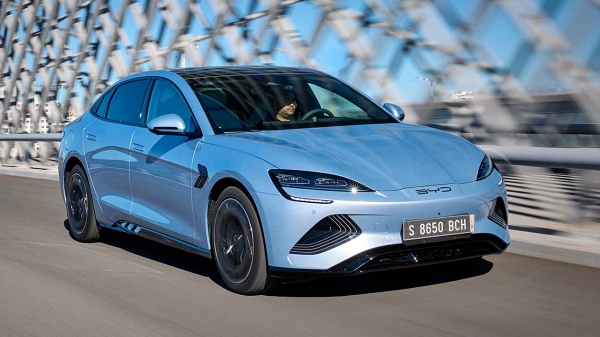
In the ultra-low-price EV segment, the BYD Seagull drew attention. Sold in China for about $8,000, the Seagull offers heating and air conditioning, responsive infotainment and cabin space for four adults despite its small body.
After experiencing the car firsthand, the tester said they could understand why the Seagull once became a best-seller in China. They stressed that despite its low price, it did not feel cheap and did not leave an impression of poor finishing quality. They said the export model’s price could rise sharply above China’s domestic price, but that it could still be competitive at around $20,000.
The Xiaomi SU7 and YU7 were cited as examples showing how a technology company entering the auto market can compete differently from established automakers. Xiaomi’s first mass-produced car, the SU7, was reported to have logged more than 50,000 pre-orders within 1 hour of sales starting. The SU7 electric sedan and the YU7 electric crossover are promoted on design and performance that evoke Tesla and the Porsche Taycan, among others.
The tester said both vehicles met expectations. They said the pair showed top-tier finish in vehicle control and driving feel in China, and that the software, including an integrated app and other features, felt more refined than in some Tesla vehicles.
Pricing was also cited as a strength. The analysis said the SU7 and YU7 offer similar performance while being priced somewhat below Tesla, letting them target consumers who want both price and technology.
The Geely EX5 was assessed as focusing on fundamentals rather than flashy design. The mass-market electric crossover may not look especially distinctive from the outside, but its strengths were cited as spacious interior room, quick infotainment response and stable driving performance.
In the Mexican-market specification, the price is about $40,000. It was assessed as being in a similar price range to the Volkswagen ID.4 while having more polished product competitiveness. It was also noted that it was easier to handle on a track than expected.
Finally, the Nio-affiliated small premium hatchback Firefly was introduced as the model the tester personally preferred most. Aiming at a market where the Fiat 500e and Mini Cooper SE compete, Firefly is a car that focuses on balancing design, convenience, driving fun, ride comfort and infotainment rather than competing on excessive power or battery capacity.
The tester assessed Firefly as one of the EVs closest to what they want. They valued that it was not simply fast or long-range, but instead evenly equipped with the elements needed for everyday use.
A common feature across these vehicles is that the competitiveness of Chinese EVs is no longer limited to the “ability to make things cheaply.”
From micro hatchbacks to luxury electric vans, high-performance sedans and mass-market crossovers, Chinese companies are raising not only price competitiveness but also packaging, software and driving feel at the same time. Another point to note is that technology companies entering from outside the existing auto industry, such as Xiaomi, are competing with automakers by emphasizing software and ecosystem competitiveness.
There are still high barriers to Chinese EV entry into the U.S. market. Tariffs and technology regulations are among the main ones. In contrast, overseas expansion of Chinese EVs is already widening in other markets such as Mexico.
The U.S. auto industry is also watching this trend. Ford CEO Jim Farley has previously mentioned the possibility that Chinese automakers could enter the U.S. market within the next 10 years.
Chinese EVs are not in a position to flood U.S. roads right away, but it is worth noting that Chinese companies are creating a new standard of product competitiveness that combines price competitiveness with space use, software, design and driving performance.
Ultimately, the real competitiveness of Chinese EVs is shifting from “how cheaply they sell” to “how much they offer at the same price.”
 Jinju Hong
hongjj@d-today.co.kr
Jinju Hong
hongjj@d-today.co.kr