
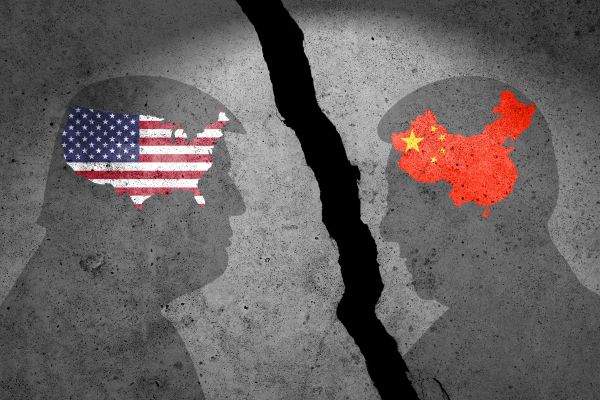
Chinese artificial intelligence models are rapidly closing in on the United States in performance and speed of adoption. But the United States still maintains a large advantage in cutting-edge chips, computing resources, fundraising and talent recruitment, CNBC reported on Aug. 7 local time.
Hugging Face Chief Executive Clem Delangue (클레망 들랑그) said this week that China is clearly leading the open-model field now and that at the current pace it could gain an advantage in frontier models by the end of this year or next year.
Chinese models are narrowing the gap with leading U.S. systems. Moonshot's Kimi K3, released in July, came close to top models from Anthropic and OpenAI in benchmarks and led in some categories. As performance improves, adoption of Chinese models is rising among Western companies. Some say the top-tier open models that can be downloaded, modified and self-hosted are all made in China. There is also a view that China is ahead in robotics.
Chinese AI is also price-competitive. Even if it lags in frontier models, it is establishing itself as a cheaper and higher-performing alternative, and adoption is increasing in the United States as well as in developing countries in Africa. Daniel Rimpler (대니얼 렘러), a senior fellow at the Center for a New American Security, said that if the current trend continues, Chinese AI is likely to become the default choice in developing countries. He explained that if Chinese AI technology becomes the standard, those countries may move politically closer to Beijing and Chinese companies could secure a foothold in local markets.
China is also seen as having strengths in areas where AI will be applied in practice, including robotics, autonomous vehicles and running the state. Keegan McBride (키건 맥브라이드), head of science and technology policy at the Tony Blair Institute, said China is in a favorable position if manufacturing, robotics, automated science infrastructure and AI-based state operations become key to creating AI value.
Computing resources remain a weakness for China. The United States has the most powerful AI models, technology alliances and an overwhelming advantage in computing power. U.S. export controls greatly restrict Chinese AI companies' access to cutting-edge chips. These constraints weaken not only training of larger and more powerful models but also the ability to provide inference services. After demand for Kimi K3 surged, Moonshot temporarily halted new subscriptions due to capacity shortages.
China is seeking responses such as access to overseas computing resources and distilling U.S. models to overcome these constraints. It also faces allegations of smuggling Nvidia chips. China's semiconductor industry is developing, but the gap with the United States remains large. The United States also retains strengths in private capital and talent. Anthropic and OpenAI have scaled up by raising large sums, and talent is still flowing to the United States, CNBC reported.
 Chi-gyu Hwang
delight@d-today.co.kr
Chi-gyu Hwang
delight@d-today.co.kr