
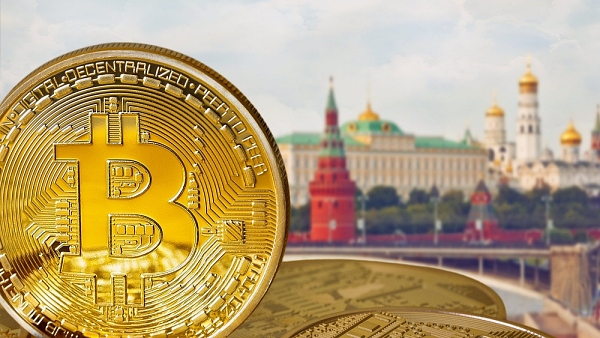
Russia has finalised a bill setting out a regulatory framework covering cryptocurrency exchanges, brokers, custodians and investors. Key provisions take effect from September 2026, and the ban on using cryptocurrency to pay for goods and services inside Russia remains in place.
Cointelegraph, a blockchain outlet, reported on Aug. 6 that Russian President Vladimir Putin signed bill No. 1194918-8 on digital currency and digital rights.
The law focuses on setting operating standards across Russia's cryptocurrency market participants. It applies to cryptocurrency service providers including exchanges, brokers and custodians. Exchange operators in particular must meet regulatory requirements and join a self-regulatory organisation for financial markets.
The approach to individual investors is also specified. Retail investors can buy only approved cryptocurrencies through brokers. The annual purchase limit is set at 300,000 roubles per broker. Qualified investors, by contrast, can buy any cryptocurrency without such limits. As the title of the bill, the "Law on Digital Currency and Digital Rights", suggests, Russia chose to manage cryptocurrency circulation within the system by dividing what is allowed, rather than imposing an outright ban.
The effective dates are staggered. Key provisions apply from Sept. 1, 2026. Some provisions related to non-resident digital depository institutions take effect from July 1, 2027. This means Russia's market will have more than about a year of preparation before the system is implemented, rather than shifting immediately to a full overhaul.
The Central Bank of Russia will hold supervisory authority. It will oversee the regulated cryptocurrency market, draw up detailed rules and determine which cryptocurrencies licensed brokers can offer. For market participants, the range of tradable permitted assets and the brokerage structure are more likely to be specified according to the central bank's judgment.
The legislative process has also entered its final stage. Russia's lower house, the State Duma, approved the bill after a final reading at the end of July. Putin's signature then finalised the legal framework. Use as a means of payment remains blocked. Russia kept the provision banning the use of cryptocurrency to pay for goods and services inside the country under the law.
The structure is closer to allowing investment and trading under regulation while drawing a line against payments in the real economy. It also applies approved assets and purchase limits to retail investors while giving qualified investors broader choice, applying different rules by investor type. For market operations, entry rules for businesses such as exchanges and custodians are expected to take hold first, followed by the central bank setting the detailed range of products.
Key points to watch will be which cryptocurrencies are actually offered through licensed brokers, and how requirements to join self-regulatory organisations and supervisory standards change the structure of market participants. With provisions on non-resident digital depository institutions set to take effect additionally in 2027, Russia's institutionalisation of cryptocurrency is more likely to proceed as a step-by-step adjustment process rather than a single measure.
 Jinju Hong (홍진주)
hongjj@d-today.co.kr
Jinju Hong (홍진주)
hongjj@d-today.co.kr