
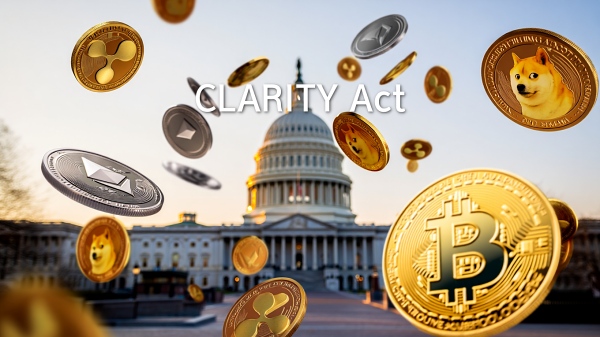
[DigitalToday reporter Yoonseo Lee] Hester Peirce (헤스터 피어스), a U.S. Securities and Exchange Commission (SEC) commissioner nearing retirement, said she is optimistic about the chances of the Clarity bill passing.
Bitcoin Magazine, a blockchain outlet, reported on Aug. 4 local time that Peirce said passage would clarify the division of authority among regulators over the crypto spot market. She said the industry, investors and authorities would all have clearer standards.
Peirce appeared on CoinDesk's "The Policy Protocol" and stressed the need to move the bill forward. "I still think this bill will pass," she said. "A clear line will be drawn on who has authority over the crypto spot market." She added that even if the bill does not pass, a framework can be 마련 for those pursuing fundraising using cryptocurrencies.
The bill's core aim is to create a regulatory framework for the broader U.S. crypto market. It is a market structure bill the industry has long sought, but the deadlock continued throughout 2026. A key reason cited is concerns raised by banking lobby groups that crypto firms could be allowed to offer customers stablecoin yields.
The bill revised some disputed points after an amended version was resubmitted in July. The amendment included ethics-related provisions and banned government officials and their families from issuing or promoting cryptocurrencies. Some Democrats, however, continue to say the bill still needs further improvements.
Peirce said she expects follow-on work to continue even after the bill passes. "If the bill passes, we have a lot of regulatory work to do," she said. She stressed that the SEC would not be hands-off even if the bill is not enacted.
Her remarks also align with a shift in the U.S. approach to crypto regulation. Peirce has been seen within the SEC as relatively friendly to the crypto industry and has been known in the market by the nickname "crypto mom." By contrast, during former SEC Chair Gary Gensler's tenure, the SEC took a hard line on the digital asset industry and filed lawsuits against multiple crypto companies.
After Donald Trump took office as U.S. president in 2025, U.S. regulators including the SEC shifted in a more favorable direction toward crypto legislation and institutionalisation. The SEC also launched a task force that year dedicated to crypto policy.
Against this backdrop, whether the Clarity bill is enacted is emerging as a key variable that will determine how regulatory authority is allocated in the U.S. crypto market and the pace of institutional rule-setting. If it passes, the boundary of authority among regulators over spot-market oversight is expected to become clearer. Even if passage is delayed, it has been suggested the SEC could continue work to create a separate regulatory framework related to fundraising using cryptocurrencies.
 Yoonseo Lee
yslee@d-today.co.kr
Yoonseo Lee
yslee@d-today.co.kr