
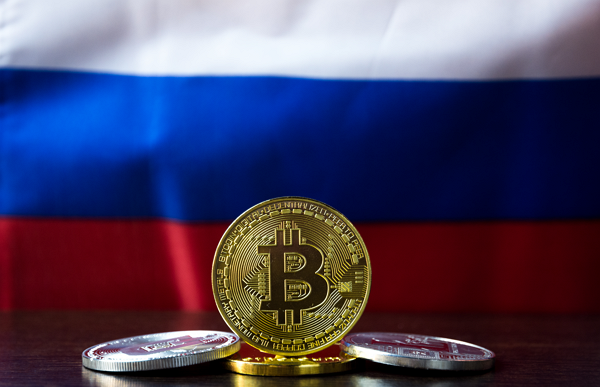
[Digital Today reporter Yoonseo Lee] Russia is preparing to legalise cryptocurrency, but many local respondents still do not feel it has practical value, a survey showed.
On Aug. 4 (local time), blockchain media outlet Cryptopolitan reported that a survey by Russian media company Rambler&Co found about 69 percent of respondents said there would be no clear place to use cryptocurrency even if it is legalised next month.
The survey questioned about 2,000 internet users ahead of the implementation of Russia's comprehensive cryptocurrency regulatory framework. Russia's lower house of parliament, the State Duma, recently passed a bill on "digital currency and digital rights". For the law to be finalised, it requires approval by the upper house, the Federation Council, and the signature of President Vladimir Putin.
A key point is that Russia is trying to bring its rapidly growing cryptocurrency market into the regulatory system. Major provisions are set to take effect on Sept. 1, and some additional rules will apply from 2027. The new system regulates activities related to investment and trading and also includes a licensing framework for platforms dedicated to cryptocurrency exchange and custody.
The scope of market opening is limited. Ordinary Russians will be able to legally access cryptocurrencies such as bitcoin for the first time, but the eligible assets will be limited to high-liquidity coins. Annual investment limits for non-qualified investors will also be capped at less than $4,000 (about 5.7 million won).
These conditions appear to be keeping actual demand low. Some 52 percent of respondents said they do not currently use digital assets and did not know how legalisation would affect their lives. Others outlined limited plans for use. Some 8 percent said they were willing to use cryptocurrency for overseas purchases, and 6 percent said they would view it as a tool for long-term investment and asset diversification. Another 4 percent said they would use it for business activities, while 13 percent expected other uses.
Some respondents viewed the introduction of regulation positively. Some 22 percent said it was better to regulate cryptocurrency even with many restrictions. Another 20 percent said they had been waiting for a shift to a market with clear rules, and 6 percent said they became interested after the bill was adopted. They cited regulatory clarity and risk protection as more important conditions than guarantees of quick profits.
A lack of information also emerged as a major factor. The survey found 38 percent wanted "accurate information" about cryptocurrency. Another 36 percent wanted unambiguous laws and regulations, and 16 percent said they expected reliability from licensed platforms, easy interfaces and user support.
Understanding of cryptocurrency was also relatively low. Some 54 percent said they barely knew how cryptocurrency works, and 23 percent said they did not have enough information to grasp the market. Another 17 percent said they knew only the basics. Just 6 percent said they had investment experience.
Even so, expectations for the new bill are not entirely absent. Some 39 percent said they hoped the legislation would simplify financial transactions in the digital asset sector. If such changes materialise, 15 percent said they would be ready to view cryptocurrency as an alternative to existing currencies. But with direct payments still banned, the scope of actual use is likely to remain limited even after the system takes effect.
Separately, Russia is also preparing to introduce the digital ruble, a central bank digital currency. In another survey, 46 percent said they planned to use the digital ruble when it launches, and the Bank of Russia is preparing to open the platform to the public from the same September.
 Yoonseo Lee
yslee@d-today.co.kr
Yoonseo Lee
yslee@d-today.co.kr