
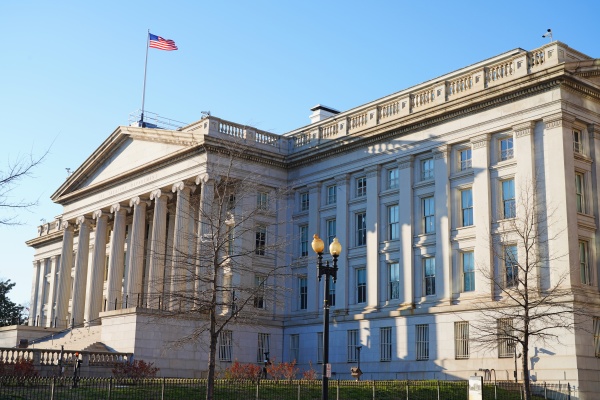
Tyler Williams, an adviser who has overseen digital asset policy at the U.S. Treasury, is reported to have left the government ahead of the Senate's August recess. With the market-structure bill known as the "Clarity" bill, a key legislative priority for the crypto industry, facing delays, concerns are also growing that policy momentum is weakening.
Cryptopolitan, a blockchain media outlet, reported on Sunday that Williams is expected to return to the private sector. He served as an adviser on digital assets appointed by Treasury Secretary Scott Bessent in February 2025 and has been involved in setting the department's crypto policy direction.
During his tenure, Williams took part in drafting a 163-page White House digital assets report and is reported to have joined discussions on the Clarity bill and consultations related to a federal bitcoin reserve. In April last year, he was also involved in announcing a Treasury program to share cybersecurity information with digital asset firms.
His departure is drawing attention as it coincides with the Senate schedule for taking up the Clarity bill. The bill seeks to clearly separate digital asset oversight authority between the U.S. Securities and Exchange Commission and the Commodity Futures Trading Commission. It also includes provisions to protect blockchain developers from bearing excessive liability arising from the use of third-party code.
The crypto industry views the Clarity bill as key legislation for establishing the U.S. digital asset regulatory framework. But with the Senate's August recess starting on the 10th, there is effectively little time left for passage.
The biggest obstacle is vote counting. Republicans hold 53 seats in the Senate, but 60 votes are needed for cloture to block a filibuster. To pass the bill, cooperation from at least 7 Democrats or Democrat-leaning independents is required.
Some Democratic lawmakers, however, oppose it, raising concerns about ethics rules and conflicts of interest involving the crypto industry. Senator Elizabeth Warren has continued strong criticism of the Clarity bill and is putting the brakes on its progress.
Senate leadership has also not presented a specific timetable. Senate Majority Leader John Thune has expressed intent to push for a floor vote, but has not disclosed what procedure will be used to bring up the bill. As of Aug. 3, the Clarity bill was not included on the Senate floor schedule.
Market expectations are also fading. Galaxy Research cut its estimate of the likelihood of the Clarity bill passing this year to 30 percent from 50 percent. On prediction market Polymarket, the likelihood of passage has also fallen to about 30 percent recently from more than 80 percent earlier this year.
In the industry, concerns are also emerging that pro-policy forces are weakening in Washington. Crypto journalist Eleanor Terrett said on social media, "It feels like crypto allies are collectively leaving Washington," and mentioned the situations of SEC Commissioner Hester Peirce and Senator Cynthia Lummis alongside Williams.
Still, calls for legislation from the financial sector and the crypto industry continue. An industry coalition involving BlackRock, Fidelity and Goldman Sachs is stressing the need to pass the Clarity bill, and Coinbase is also calling for passage to bring regulatory clarity.
Ultimately, the issue is significant because it involves the simultaneous departure of key policy personnel and legislative delays. With the person who led digital asset policy at the Treasury now gone, whether the Clarity bill can be passed before the recess is emerging as a major variable that will shape the direction of U.S. crypto regulation.
 Jinju Hong
hongjj@d-today.co.kr
Jinju Hong
hongjj@d-today.co.kr