
[DigitalToday reporter Jin-ho Lee] The Telecommunications Technology Association (TTA) has provided South Korea’s first internationally accredited test service for long-range, low-power wireless technology Wi-Fi HaLow and completed certification.
TTA said on the 28th it has become the first in South Korea to provide an internationally accredited test service for the Wi-Fi Alliance (WFA)'s Wi-Fi CERTIFIED HaLow.
TTA operates the only internationally accredited Wi-Fi HaLow test lab among domestic testing institutions. Through this certification, products equipped with South Korean semiconductors were recognized for compliance with international standards and interoperability.
Wi-Fi HaLow is a long-range, low-power wireless communication technology that uses unlicensed spectrum below 1 GHz. It is characterized by better obstacle penetration and communication range than existing Wi-Fi, and lower power consumption. A single access point (AP) can connect up to about 8,000 devices simultaneously. Communication range reaches up to 1 km. It can be used in internet of things (IoT) environments such as smart homes, smart cities and smart factories.
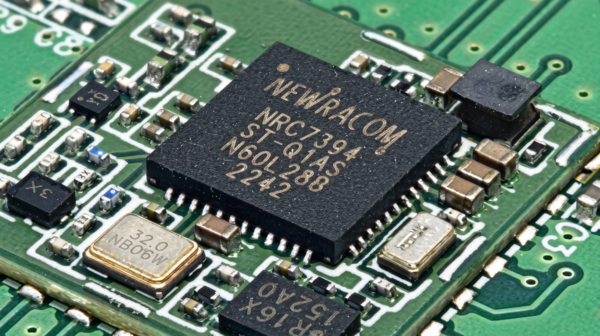
The certified product is South Korean chip design company Neuratek’s NRC7394 EVB. It is equipped with Neuratek’s self-developed system-on-chip (SoC) NRC7394. NRC7394 is an integrated solution that implements a communications control modem, wireless transceiver and system platform on a single chip. It also obtained U.S. Federal Communications Commission (FCC) radio certification.
Neuratek plans to use the certification to expand its push into the industrial IoT market in North America and Japan, including smart retail and logistics warehouses.
TTA Chairman Seung-hyun Son (손승현) said, "This certification is an achievement that proves the global competitiveness of South Korean Wi-Fi HaLow technology." He added, "We will support a testing and verification environment so that domestic technology can spread into the ultra-long-range, low-power IoT market."
 Jin-ho Lee
jhlee26@d-today.co.kr
Jin-ho Lee
jhlee26@d-today.co.kr