
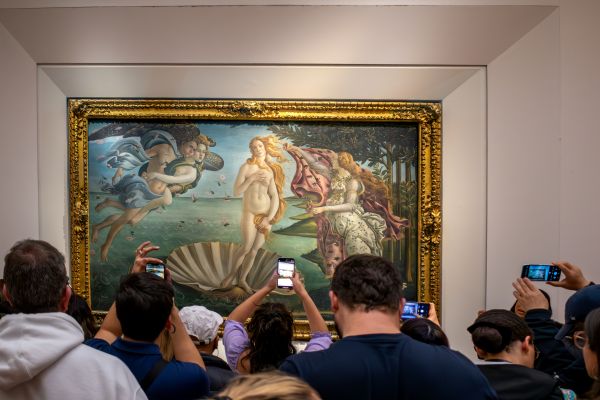
A study found that the wider the income gap in a region, the fewer people use cultural facilities such as cinemas, theatres, museums and performance venues.
According to online media outlet Gigazine on July 16 local time, a study that tracked Italy’s 20 regions from 2011 to 2022 showed that cultural participation was lower in regions with more severe income inequality.
The study was conducted by a research team led by Roberto Cellini (로베르토 체리니) and Tiziana Cuccia (티치아나 쿠차) at the University of Catania in Italy. The team analysed the relationship between regional income distribution and cultural participation using 240 annual data points compiled by Italy’s National Institute of Statistics (ISTAT).
Cultural activities were divided into six items: visiting a cinema at least 4 times a year; attending theatre at least once; visiting museums and exhibitions; visiting archaeological sites and memorial buildings; attending classical and opera performances; and attending concerts in other genres. The team classified people aged 6 and older who took part in 2 or more of these activities in the past 12 months as active cultural participants.
The analysis showed clear regional disparities. Cultural participation in southern Italy was generally low, and from 2020 to 2022, when COVID-19 spread, the eight southern regions remained the bottom eight in participation. Despite movement restrictions being relatively flexible compared with other regions, participation was low, leading the team to assess that socio-cultural factors may have had a greater impact on cultural participation than the strength of disease-control regulations.
The variable most clearly associated with cultural participation was the Gini coefficient, a measure of income inequality. The higher the Gini coefficient, the lower the share of active cultural participation tended to be.
This result held even after reflecting per-capita average income, each region’s unique characteristics and year-by-year changes that affected all regions. It means that even if a region’s average income is high, cultural participation can be low if income is concentrated among certain groups.
A breakdown by activity showed similar results. In most areas — theatre, museums and exhibitions, archaeological sites and memorial buildings, classical and opera performances, and concerts in other genres — participation was significantly lower in regions with wider income gaps. The item for visiting a cinema at least 4 times a year showed a tendency for participation to fall as the income gap widened, but it did not reach statistical significance.
The team cited cost burdens and unequal opportunities as factors that hinder cultural participation. In regions with wide income gaps, ticket prices and transport costs can weigh more heavily on low-income groups. It also explained that quality education and cultural experiences in childhood may be skewed toward higher-income groups.
The study also pointed out that increasing cultural facilities and events alone would make it difficult to close participation gaps. The team warned that if policymakers do not consider which groups actually take part in cultural activities, newly created cultural opportunities could go only to existing participants and widen disparities.
The team concluded that expanding social inclusion requires policies that reduce income gaps and improve access for diverse groups alongside expanding cultural infrastructure. It judged that broadening the base of cultural participation also requires creating the economic and social conditions that allow people to access cultural experiences.
 Yoonseo Lee
yslee@d-today.co.kr
Yoonseo Lee
yslee@d-today.co.kr