
China's crude oil imports have fallen to their lowest level in 9 years. As supply uncertainty persists around the Strait of Hormuz, rapid growth in electric taxis and ride-hailing vehicles is emerging as a key factor driving down oil consumption, according to an analysis.
Cryptopolitan, a blockchain media outlet, reported on Tuesday that China's June crude imports fell 41.3 percent from a year earlier to 29.27 million tons. That was the lowest level since October 2016.
The decline coincided with the prolonged impact of tensions in the Middle East that began in late February. Columbia University's Center on Global Energy Policy estimates that about 45 to 50 percent of China's seaborne crude imports pass through the Strait of Hormuz. The analysis said the electrification shift in China becomes more pronounced as supply uncertainty increases.
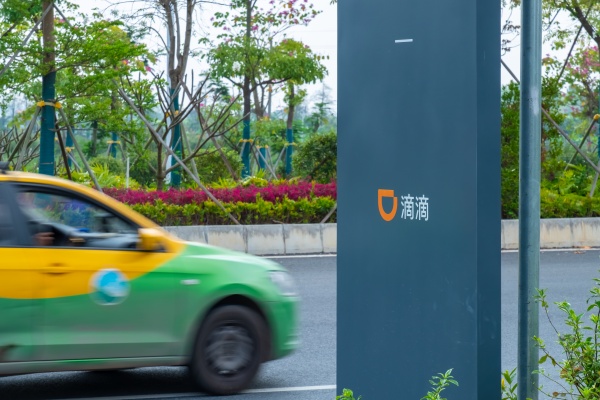
The biggest changes have appeared in the taxi and ride-hailing markets. China's Ministry of Transport said about half of the roughly 1.3 million taxis nationwide already operate as electric vehicles. In some major cities, the electrification rate for taxis has effectively risen to nearly 100 percent, it added.
Ride-hailing platform Didi Chuxing is also accelerating electrification. The company added 2 million electric and hybrid vehicles last year, expanding its non-gasoline fleet to 8 million. Data cited by IT-focused outlet TNW showed electric vehicles account for 75 percent of total mileage booked on the Didi platform. That suggests most urban mobility demand has already shifted to an electrification-based model.
Fuel consumption indicators show the same trend. China's gasoline consumption in May fell 10 percent from a year earlier, and diesel consumption dropped 14 percent. Over the same period, road freight transport rose 2 percent and Labour Day holiday travel hit a record high. Taxi and ride-hailing trips also increased 6 percent from a year earlier to 3.05 billion. Movement of people and logistics increased, but oil consumption fell.
The market assessment is that geopolitical uncertainty around the Strait of Hormuz is further bringing forward the existing electrification trend. JPMorgan forecast China's gasoline demand will fall by 150,000 barrels per day this year, and decline by an additional 50,000 barrels per day in 2027. Natasha Kaneva (나타샤 카네바), a JPMorgan analyst, said, "This conflict may have accelerated behavior changes that were already underway," and suggested China's oil dependence could fall faster than the market expects.
Another analysis said the shift stems from economics rather than an abrupt policy change. The rollout of electric taxis had been expanding before the crisis due to lower operating costs and improved profitability. More recently, higher oil prices, wider availability of low-priced electric vehicles and an increase in new drivers combined to push taxi fares down 10 to 15 percent over the past 6 months.
That has also led to more cases in which drivers who own gasoline vehicles use ride-hailing services instead of driving themselves, it was reported.
Transport experts said the way people move around cities is changing. Dajong Liu (대종 류), East Asia director at the Institute for Transportation and Development Policy, said, "Overall mobility demand continues to rise, but more trips are shifting to public transport such as taxis and subways."
The refining industry is also seeing changes. Chinese refiners' crude distillation unit utilisation rate in June was 57.72 percent, close to the lowest level in the past 10 years. China's reduced crude buying helped limit the rise in global oil prices even as Brent crude climbed above $79 a barrel due to Middle East tensions.
Longer-term forecasts also tilt toward declining oil demand. Dai Jiaquan (다이자취안), chief economist at the Economics and Technology Research Institute of China National Petroleum Corp (CNPC), forecast China's crude demand will peak within the next 5 years. He said current refining capacity of 900 million to 1 billion tons per year is likely to mismatch expected demand going forward.
Environmental group Greenpeace also predicted that 90 percent of mileage from China's taxi and ride-hailing services will be covered by electric vehicles by 2035. The analysis said supply uncertainty around the Strait of Hormuz is acting as a catalyst that goes beyond short-term crude supply and demand, accelerating changes in China's urban mobility and oil consumption structure.
 Jinju Hong
hongjj@d-today.co.kr
Jinju Hong
hongjj@d-today.co.kr