
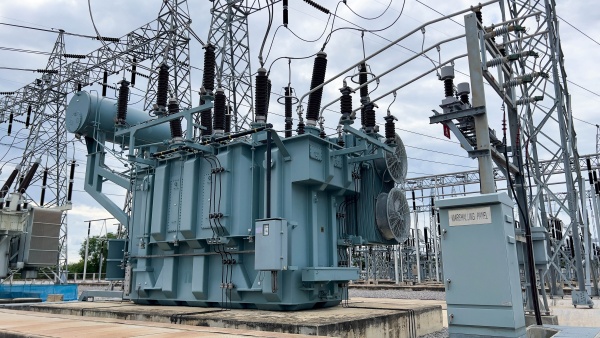
Europe and North American power grids could see new power connections delayed for years due to shortages of power transformers, a key piece of equipment, a warning has said.
On July 14, local time, IT outlet TechRadar reported that demand for power grids is rising at the same time as AI data centres, electric vehicles and industrial electrification expand, deepening bottlenecks in transformer production.
The biggest problem is delivery delays. Orders that typically took 6 to 12 months before 2020 now take 24 to 48 months. Large transformers above the 100 MVA and 230 kV class used to ship in about 12 to 18 months, but deliveries can now take well over 36 months. Equipment prices have also risen 50 to 80 percent from before 2020.
Demand-side pressure is rising in multiple areas at the same time. Electric vehicle adoption and industrial electrification have increased the burden on local grids. Wind and solar facilities also need dedicated step-up transformers that change voltage before long-distance transmission. Battery storage projects also require dedicated transformers that connect each facility directly to the grid.
The largest new source of demand is being identified as AI data centres. A single site can draw hundreds of megawatts, comparable to the electricity use of a mid-sized city. Large technology companies can secure factory output for years through advance payments, lengthening wait times for relatively smaller buyers.
Supply-chain bottlenecks are not simply a matter of production speed. There is a shortage of grain-oriented electrical steel used in transformer cores, and efficiency standards set by the European Union and the U.S. Department of Energy make it hard to substitute other steels. Copper prices used for internal windings remain high. A shortage of skilled workers is also blocking production expansion because assembly processes rely heavily on precise manual work.
Factory testing facilities are also cited as a constraint. Transformers must undergo impulse voltage and short-circuit evaluations before shipment, and this testing equipment has limited weekly throughput. That is why expanding production lines alone does not quickly ease overall supply.
Replacement demand for ageing infrastructure has also piled up. Many substation facilities in the United States and Western Europe were built 30 to 50 years ago and are in urgent need of replacement. Power companies are therefore competing directly with private developers for the same factory capacity. As a result, wait times are rising for nearly all buyers.
Small residential and commercial transformers are in relatively better shape. These units can generally be shipped within 12 to 20 months. Delays for large industrial equipment are far longer, and the industry views the pressure not as a temporary phenomenon but as a structural problem.
Buying strategies are also changing under these conditions. The industry sees buyers that place orders early, secure factory slots in advance and standardise technical specifications as better able to cope with long delays. Another option being discussed is to diversify suppliers rather than relying only on manufacturers facing concentrated demand. As long as global demand continues to exceed production capacity, power-grid equipment bottlenecks are likely to remain a variable in the expansion of AI infrastructure and the broader power transition.
 Jinju Hong
hongjj@d-today.co.kr
Jinju Hong
hongjj@d-today.co.kr