
Korea's National Information Society Agency (NIA) is set to demonstrate a package that combines Korean open RAN equipment with AI services.
NIA said on Tuesday it will 추진 a domestic and overseas demonstration project, selected through a call for proposals by the Ministry of Science and ICT, to support overseas expansion by domestic open RAN companies.
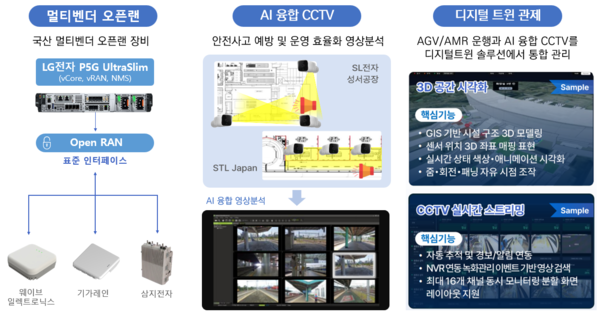
Open RAN is a technology that designs mobile wireless access networks based on open standards to enable interoperability between equipment from different manufacturers. The project will run parallel trials that build and verify open RAN infrastructure and AI services at SL Electronics' production plant in Korea and STL Japan's logistics center in Japan.
NIA plans to verify the technology simultaneously at domestic and overseas sites to shorten the time needed to enter overseas markets and raise the chances of overseas expansion by Korean companies. The demonstration will use LG Electronics' software-based base station equipment O-DU and O-RU radio equipment from Wave Electronics, Gigalane and Samji Electronics. It will combine them with AI services to build it as a "Korean open RAN and AI service package".
GNTel, the lead company, will work with Japan's telecom equipment company Thinklayer to carry out the entire process of the domestic and overseas trials. The open RAN equipment used in the trials has completed certification by an internationally accredited test laboratory and global interoperability tests.
NIA will also analyse 5G private network and open RAN-related policies, regulatory trends and market demand in major countries including the United States, Japan and Europe. Based on the analysis, it will develop country-by-country customised entry strategies to support Korean open RAN equipment entering overseas markets.
It will also pursue improvements in communications quality at manufacturing and logistics sites. At sites with dense radio obstacles such as steel racks, autonomous driving robots using WiFi can face problems such as communications cutting off or stopping while switching access stations. NIA plans to build a 5G private network-based open RAN that manages the entire site under single coverage to reduce communication disruptions for autonomous driving robots and minimise losses caused by process stoppages.
It will also build open RAN communications equipment together with AI risk-detection closed-circuit television (CC) cameras and a digital twin control system. The plan is to package base stations, safety management technology, and communications and robot control solutions into an integrated product to target overseas markets.
NIA President Hyeong-cheol Kim (김형철) said, "We will link cooperation for win-win growth between large companies and small and medium-sized companies with locally tailored strategies to lower barriers to entering the global supply chain for Korean open RAN and deliver tangible results."
 Jin-ho Lee
jhlee26@d-today.co.kr
Jin-ho Lee
jhlee26@d-today.co.kr