
The balance of margin loans fell for a sixth straight session and dropped to the lowest level in about three months due to the fallout from a sharp decline in South Korean stocks. Investor deposits, a pool of cash waiting to enter the market, rose after four sessions.
The Korea Financial Investment Association said on Monday that the balance of margin loans stood at 34.8 trillion won as of July 13.
The margin loan balance has fallen for six straight sessions since July 3. It is the lowest level since 34.7 trillion won on April 21.
Margin loans are funds that investors borrow from brokerages to buy stocks and have not yet repaid. They generally rise when stock prices climb and tend to fall during market corrections.
By market, margin loan balances in the KOSPI market fell to 27.4 trillion won. The KOSDAQ market balance was tallied at 7.3 trillion won.
This is seen as the result of investors cutting margin positions or unwinding holdings through forced selling as the KOSPI plunged in a short period.
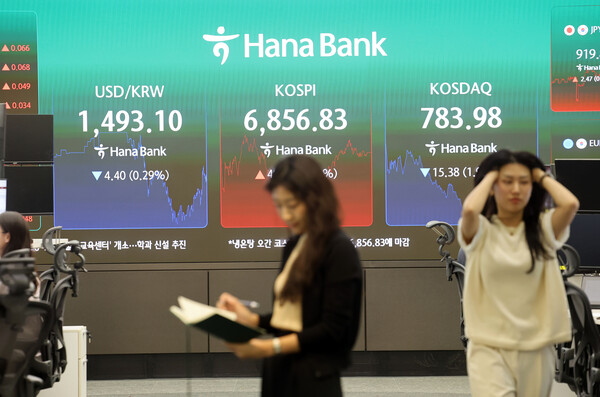
On July 13, the KOSPI closed at 6,806.93, down 8.95 percent from the previous session, falling below 7,000. Individual investors net bought about 3.9 trillion won in the KOSPI market.
Outstanding unsettled purchases in margin trading, classified as an ultra-short-term leverage indicator, also fell. On July 13, unsettled purchases stood at 26.2 billion won, down sharply from 81.6 billion won a session earlier. The share of forced selling relative to unsettled purchases fell to 1.8 percent from 5.7 percent the previous session, to less than one third of the prior level.
Investor deposits rose again. On July 13, investor deposits were tallied at 109.0 trillion won.
They had fallen to 10.6 trillion won in the previous session, the lowest level since Feb. 20, but turned higher after four sessions.
Investor deposits are funds that investors place in brokerage accounts but have not yet used to buy stocks. The rebound in deposits can also be interpreted as fresh waiting funds flowing in to prepare for bargain buying after the recent slump.
 Oh Sang-yup
yub@d-today.co.kr
Oh Sang-yup
yub@d-today.co.kr