
As the game industry's use of artificial intelligence (AI) expands beyond development tools to live services, the government is also moving to expand support and refine related systems.
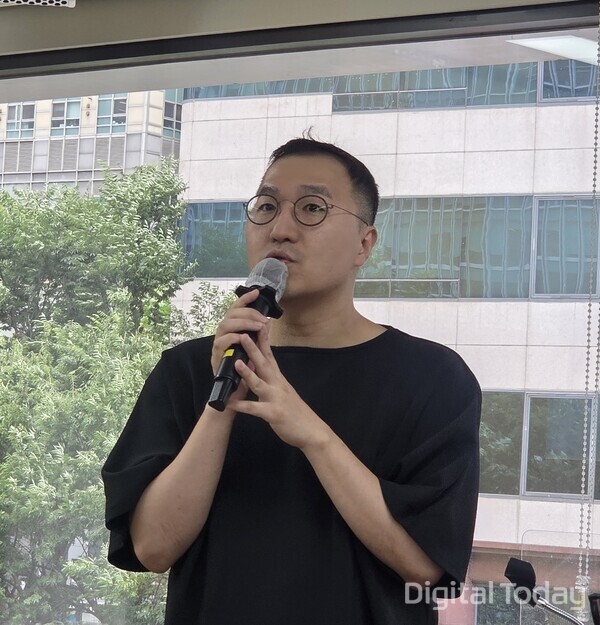
The second Game Reporters' Policy Seminar, hosted by the Game Policy Studies Association and organised by a group of game reporters, was held on Monday at the Youth Foundation meeting room in Jongno district, Seoul. At the seminar, NC AI and Krafton presented cases of AI use in game creation and live services. A following Q&A session covered the Culture Ministry's support policies and the direction of legal and institutional revisions.
NC AI: AI should raise the level of new attempts and completeness, not just output
Na Gyu-bong (나규봉), head of NC AI's Varco business team, gave a presentation titled "Does technology really augment creation?" Na said it was true that AI had lowered the barriers to game production. He said that compared with the summer of 2023, when Steam introduced a policy requiring disclosure of AI use, the number of new releases in 2025 rose 42 percent, and 22 percent of releases that year disclosed AI use.
Na said an increase in releases did not necessarily lead to creative value. He cited a tendency among users to keep playing games they already played rather than new titles. According to Na, new titles accounted for 14 percent of playtime in the survey, while most of the rest came from existing games.
Na said the meaning of AI should be found not in "faster and more production" but in "making possible what could not be attempted before". He cited as examples how it enables small creators or students to turn personal experiences and stories into games, and how it allows teams to revisit details previously abandoned because of production time limits.
As an example of improving detail, he cited background concept art work for Lineage M. Lineage M uses a quarter-view format, requiring concept artists to accurately depict viewpoints and angles they rarely encounter in daily life. The artist first created the desired composition using the 3D generation tool "Varco 3D", then produced the artwork based on it, reducing work time and strengthening detailed expression.
NC AI also introduced a case in which it used its lipsync technology, "Syncface", to implement mouth movements for low-importance characters that had been omitted due to production schedules.
Na described AI-generated output as "80 points if said kindly, about 60 points if said cruelly". He said the needed quality could be reached only by revising and supplementing it within a creator's existing workflow. He said the time AI frees up should be used not to create more content, but to make up for work previously abandoned and to raise completeness.
Na also cited training data and rights handling for generative AI as key tasks. He said that when developing game asset generation tools such as Varco 3D, NC mainly used assets from its own released titles and unreleased projects for training. He said that when external data was needed, the company used it only after setting out, by contract, the scope of use, rights to generated output and responsibility in the event of disputes.
Krafton applies AI to live services, from match prediction to an AI teammate
Sung Jun-sik (성준식), head of AI for game R&D at Krafton, presented three cases: esports AI applied to Battlegrounds, anti-cheat AI and the AI companion character "PUBG Ally".
Among the esports AI features, the win-rate prediction function was designed to estimate the team most likely to win as the number of remaining teams falls. Sung said prediction performance fell sharply when a model trained on data from standard ranked matches was applied to pro matches. He said that was because pro players' play tendencies and strategies differed from those of ordinary users.
Krafton then optimised the model by training it on about 9,000 accumulated tournament matches. In a situation with three teams remaining, the simple probability is 33 percent, but the algorithm raised the win-team prediction rate to about 88 percent, he said.
The goal of win-rate prediction is not limited to guessing match outcomes. In Battlegrounds, there are periods early in matches with fewer firefights while players secure equipment and move. Krafton provided data such as win rates, movement routes and firefight likelihood on the broadcast screen so commentators could use it as material to explain the match. It also applied AI to a highlight function that quickly extracts key scenes.
In anti-cheat, Krafton is analysing play patterns to identify users suspected of cheating. Because it must monitor more than 20 million users a day, applying a heavy model could raise operating costs. The company conducted R&D to raise accuracy based on a lighter model.
Sung said the current system is reported to detect about 10,000 suspected cases a day. He said accounts are not sanctioned immediately based solely on detection results. The structure is to decide sanctions after separate verification confirms whether cheating actually occurred.
The third case is the AI companion character "PUBG Ally". PUBG Ally uses a small language model with 2 billion parameters, based on Nvidia ACE technology and running on a user's PC. It is designed to recognise voice commands and game situations, carry out actions such as movement and item acquisition, and judge strategy by reflecting the flow of conversation.
In an offline test held ahead of an official beta service, about 1,000 people participated for three weeks, securing about 40,000 rounds of play data. Krafton used the data to train the model. Responses to user utterances were mostly made within 0.8 seconds, and even in delayed cases, 99 percent reacted within three seconds, it said.
Based on the technology, Krafton ran a two-week beta service for "Ally Duo" in Battlegrounds arcade mode from June 17 to July 1. Users formed a two-person team with an AI character, "Ella", and played on the Sanhok map. It supported Korean, Chinese and English voice interaction.
Krafton plans to use research results from its in-house multimodal model, "Raon", to further develop in-game AI functions.
Culture ministry to expand support for game AI, alongside legal and system revisions
Ko Young-jin (고영진), director of the Culture Ministry's Cultural AI Policy Division, said the ministry is investing around 10 billion won this year in AI solution subscriptions and training for small and mid-sized game companies and startups, and in support for producing games that use AI. He said the goal is to expand the related budget for 2027 to at least 1.5 times the current level.
The Culture Ministry is also pushing to propose within the year a tentatively named "AI Content Promotion Act". It said it is reviewing the legal basis for supporting AI content, transparency obligations and definitions of content, and that the bill aims to remove obstacles in the AI use process rather than strengthen regulation.
Some at the seminar said it is difficult to apply uniform standards because the form of AI application differs by game. Kim Myung-hoon (김명훈), a patent attorney at law firm Yulchon, said detailed standards are needed on how to display generative AI dialogue and voices in games, and how to review AI content that is hard to predict in advance under the existing game rating classification system.
On support policies, Ko said the ministry is also considering expanding support, now centred on smaller firms, in a way that also considers large companies' development of leading technologies, taking into account the gap in AI use levels between large game companies such as Krafton and NC and small firms and startups.
 Lee Ho-jung
lhj@d-today.co.kr
Lee Ho-jung
lhj@d-today.co.kr