
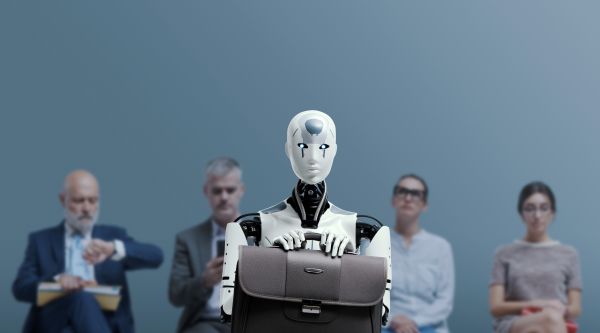
Workers aged 55 and above in occupations with high exposure to artificial intelligence have increasingly left their jobs in recent years, data showed.
CNBC reported on July 13 that a new paper by Boston College's Center for Retirement Research found older workers have become somewhat more likely to exit the labour market after the launch of ChatGPT, including through unemployment or voluntary resignations.
Jeffrey Sanzenbacher (제프리 산젠바허), an economics professor and the paper's author, said older workers aged 55 and above are changing jobs more often in AI-exposed industries. He described it as a statistically significant shift. He also said the impact was quite large in some occupations.
The study said AI could affect older workers' career length in three ways. If automation replaces existing tasks, it could lead to unemployment or an exit from the labour market. It could also push workers to move to jobs further from new technology or choose retirement amid pressure to adopt AI. On the other hand, if generative AI boosts productivity, raises wages and helps workers focus on more engaging tasks, their working lives could extend.
The trend diverged before and after ChatGPT's launch. Before the launch, older workers in AI-exposed roles were significantly less likely to leave their jobs. After the launch, the likelihood of job exit and transition into unemployment rose somewhat.
The study also identified traits of older workers more vulnerable to AI-driven change. They were more likely to be college graduates and tended to have higher incomes than workers with lower AI exposure. The findings differ from the prevailing view that low-paid jobs with a large share of manual labour would see earlier retirement.
The issue also intersects with debate over the retirement age. A recent annual report projected the U.S. Social Security trust fund could be depleted by the end of 2032. Policymakers could therefore consider reforms such as raising the retirement age, and Sanzenbacher said higher-income earners are more likely to take a bigger hit if future benefit cuts occur. He said those are the people who would need to work longer, and AI could also affect their ability to perform their actual tasks.
Older workers have been slower than younger people to accept AI. In a survey by the American Association of Retired Persons, 24 percent of respondents aged 50 and above viewed AI as a threat to their jobs, and 19 percent saw it as an opportunity. Another 37 percent said it was both a threat and an opportunity. A study by AARP and LinkedIn found older workers are more concentrated in roles that require capabilities AI cannot easily replace, such as collaboration, judgement and leadership.
Job characteristics are also a factor. Older workers' jobs often require capabilities AI cannot easily replace, such as collaboration, judgement and leadership. Sanzenbacher said older people are adopting AI more slowly than younger workers, but he did not think it was too late.
Vicki Salemi (비키 살레미), a career expert at job platform Monster, said older professionals who do not yet use AI can still respond starting now. She said learning the AI tools employers already use can be a starting point, adding that such tools can help free up time for work that requires deeper thinking. She also advised making soft skills such as communication, relationship-building and problem-solving more explicit in current roles or when changing jobs.
The study shows AI is not only disrupting jobs for younger office workers, but could also affect how long older people stay in their careers and when they retire. Whether policy debates on the labour market and retirement systems reflect the AI variable is expected to emerge as a key issue.
 Yoonseo Lee
yslee@d-today.co.kr
Yoonseo Lee
yslee@d-today.co.kr