
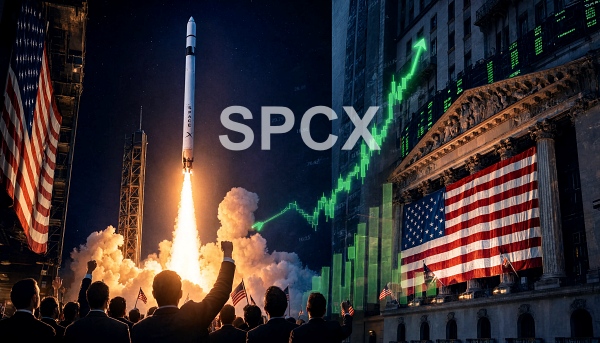
The surge in SpaceX’s corporate valuation has raised the possibility that thousands of early employees have become millionaires.
On July 9 (local time), Business Insider reported that Elon Musk (일론 머스크) said in a broadcast interview that the value of shares held by various employees, including production-line workers, would now exceed $1 million, or about 1.5 billion won.
Asked about a former welder, Musk said it was not just one welder but thousands who worked on the production line. He said that if someone joined early, there was a strong chance the value of their shares now exceeded $1 million. SpaceX listed in June with a market capitalisation of about $2 trillion, and the value of employee-held stakes also jumped sharply afterward.
Musk also explained SpaceX’s compensation philosophy. He said he has always had the philosophy that everyone at the company should receive company stock, and that employees should be able to share the gains from the company’s growth. He added that when the company prospers, employees also prosper.
SpaceX’s internal compensation structure is also reported to have operated in that direction. According to testimony from former employees, SpaceX granted stock options not only at the time of hiring but also during annual reviews and promotions. Employees could also sell some of their stakes to the company or investors at private events typically held twice a year.
Even before SpaceX listed, the market discussed the possibility of the creation of a large number of wealthy individuals. Before the IPO, Andrew Benson (앤드루 벤슨), founder of the pre-IPO trading platform Hiil Markets, estimated that a SpaceX listing could create 4,400 new millionaires and more than 400 people with assets of $100 million or more.
The share price, however, pulled back after surging immediately after the listing. SpaceX shares rose above $200 within days of listing from an IPO price of $135, but fell below $148 by the July 9 close. As a result, employee asset values also fell from their immediate post-listing highs, but early stock option holders still have large paper gains.
SpaceX management is also expanding the scope of how stakes are used. Chief executive Gwynne Shotwell (그윈 쇼트웰) and her husband donated about $300 million worth of SpaceX shares to 'Trump Accounts'. The programme is a government programme that opens an account with $1,000 deposited for every U.S. child born between early 2025 and the end of 2028.
In the interview, Musk also reaffirmed long-term space development plans beyond the IPO effect. He said he hopes to build a lunar base within 10 years and enable thousands, or as many as tens of thousands, to travel to the moon. He said Starship is designed ultimately to transport tens of thousands of tonnes of cargo to the moon, and said the goal is to build cities on the moon and Mars.
Musk also referred to his existing timeline for Mars. He said that if things go well, the first humans could be sent to Mars in about 5 years, and in 10 to 12 years thousands could head to Mars. He said the SpaceX listing highlighted both expanded employee compensation and a funding base for long-term space development, and that how the share price trend and the equity compensation system are maintained will remain a point to watch.
 Yoonseo Lee
yslee@d-today.co.kr
Yoonseo Lee
yslee@d-today.co.kr