
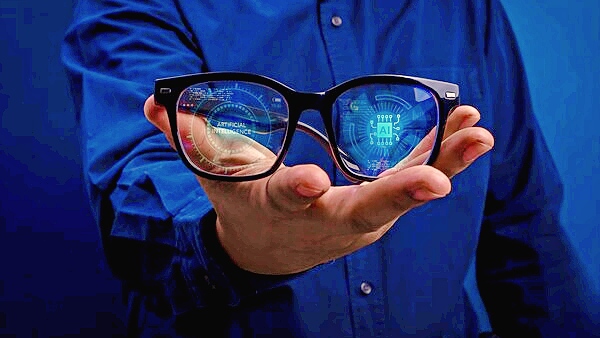
New York state will become the first in the United States to impose a blanket ban on bringing smart glasses into all court facilities.
On July 9, U.S. tech outlet Engadget reported that New York state decided to bar glasses and head-worn devices equipped with cameras and microphones from all Unified Court System facilities in the state starting July 20.
The measure covers 1,240 courts in New York state, including state, county, city, town and village courts. Smart glasses with prescription lenses are not exempt. Court entry notices tell visitors to bring regular glasses separately.
New York state said the step focuses on blocking the possibility of covert filming in courtrooms. New York Unified Court System rules ban photography and video recording, audio recording and broadcasting inside court buildings such as courtrooms, offices and hallways, regardless of whether a court is in session. The rules specify that taking photos, filming or video recording, audio recording, and broadcasting or television transmission are prohibited at any time.
Some state courts had already disallowed smart glasses, but this is the first case of a single rule being applied across an entire state's courts like New York. Some courts in Wisconsin and Pennsylvania already ban smart glasses.
Smart glasses can start recording without a user lifting a smartphone or camera, making enforcement of courtroom rules more difficult. An indicator light typically turns on or flashes to show recording, but concerns grew that users can switch it off or modify it. New York courts decided to block the devices themselves regardless of such possibilities.
The courts apply the same standard to lawyers and staff as well as visitors. Anyone wearing smart glasses must leave the device with a uniformed court security officer before entering the building.
Scenes from a public trial in February are also being cited as part of the background to the move. When Meta CEO Mark Zuckerberg attended a jury trial related to social media addiction, some members of his accompanying staff entered the courthouse wearing Meta Ray-Ban glasses. A judge reportedly warned them not to record court proceedings with the device. The judge was concerned that jurors could be filmed or identified.
Meta said its smart glasses are designed so they cannot take photos or videos if the system detects that the recording indicator light is covered. It also said it is rolling out an update that disables the camera if the indicator light is detected as physically damaged or removed in device posts. New York courts, however, decided not to allow the devices in regardless of whether they have been modified.
Restrictions on smart glasses are also spreading beyond courts. Royal Caribbean banned smart glasses in some areas on board this year, and MSC Cruises introduced partial limits last year citing privacy concerns. The Illinois legislature is also reviewing a plan to add smart glasses to a list of devices banned while driving as a way to reduce distracted driving.
Against this backdrop, New York's blanket ban shows concerns about privacy violations and covert filming linked to smart glasses are spreading into regulation of public spaces. In places such as courts where bans on recording are strict, rules are shifting toward prioritising controls on bringing devices in rather than device features.
 Jinju Hong (홍진주)
hongjj@d-today.co.kr
Jinju Hong (홍진주)
hongjj@d-today.co.kr