
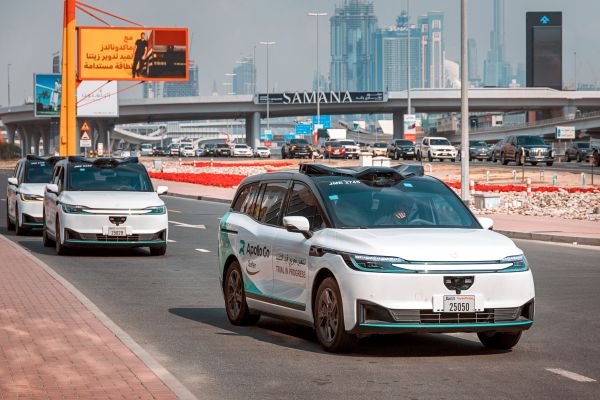
The U.S. National Highway Traffic Safety Administration (NHTSA) is pursuing a plan to eliminate the requirement to install steering wheels on driverless robotaxis under rules premised on human driving.
InsideEVs, an electric vehicle outlet, reported on July 9 that federal rules that keep requiring manual controls on vehicles designed solely for fully autonomous driving are increasingly likely to change.
Jonathan Morrison (조너선 모리슨), head of NHTSA, said in a CNBC interview that it makes no sense to require manual controls for vehicles designed so that humans never drive. Under current federal rules, most vehicles must be equipped with traditional controls such as steering wheels regardless of the technology level of robotaxi operators such as Waymo.
The move follows NHTSA's statement just a month ago that it would also remove the requirement for a physical brake pedal on self-driving vehicles. The scope of deregulation is extending to test driving. NHTSA last year announced a rule allowing automakers to request exemptions from the Federal Motor Vehicle Safety Standards (FMVSS) when they seek to test fully driverless vehicles. Production of such vehicles is currently limited to 2,500 units.
The changes could directly affect self-driving vehicle companies such as Tesla and Waymo. The outlet described it as a broader push by the U.S. government to remove obstacles related to physical driving controls for autonomous driving companies. Tesla's move to test its steering wheel-free Cybercab is also tied to the regulatory debate.
Separate from deregulation, safety concerns continue to be raised. Morrison said NHTSA is issuing calls for action to self-driving companies to ensure they do not block first responders' access in emergencies. He pointed out that remotely moving robotaxis to clear passage for emergency personnel also carries risks of its own. That means moving a vehicle could itself create another safety issue if an unmanned vehicle obstructs emergency response.
State-level regulatory trends differ in tone from the federal government. New Jersey recently proposed a bill to raise sensor hardware requirements for self-driving vehicles and to tighten testing procedures. While federal rules are moving to ease manual control requirements, some states are seeking to increase the rigor of verification before vehicles are deployed on public roads.
Ultimately, the core issue in the debate is whether to keep self-driving-only vehicles bound by existing car standards. NHTSA is seeking to revise rules that require human controls on vehicles that humans do not drive, but emergency response and testing verification systems are likely to remain issues at the commercialisation stage.
 Jinju Hong
hongjj@d-today.co.kr
Jinju Hong
hongjj@d-today.co.kr