
As volatility rises in South Korea's stock market, blame is spreading over single-stock leveraged exchange-traded funds (ETFs). But some point to other supply-and-demand factors including a semiconductor correction, foreign selling and credit provision, saying it is hard to single out single-stock leverage as the main culprit.
The Korea Exchange said on July 9 that KOSPI sidecars had been triggered 33 times this year. Circuit breakers were also triggered 6 times, accounting for half of the historical total. Over the past month, sidecars were triggered 7 times and circuit breakers 4 times in the main board market.
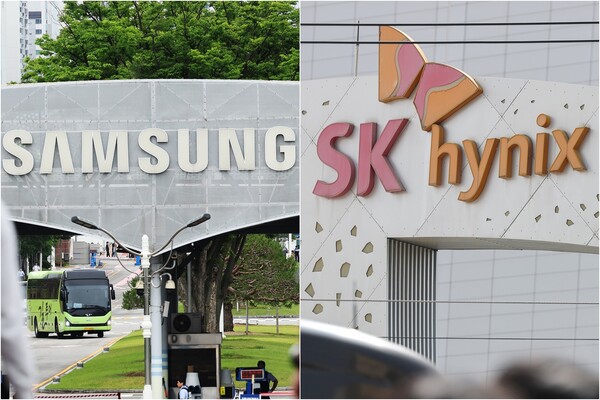
After single-stock leveraged ETFs for Samsung Electronics and SK Hynix were listed on May 27, volatility became concentrated, prompting analysis that rebalancing trades in these products deepened market declines.
Koscom's ETF Check showed that as of the close on July 9, the top ETF turnover rankings included Samsung Asset Management's KODEX SK Hynix Single Stock Leveraged (475.67 billion won), Mirae Asset Management's TIGER SK Hynix Single Stock Leveraged (212.48 billion won) and KODEX Samsung Electronics Single Stock Leveraged (140.24 billion won).
KODEX SK Hynix Single Stock Leveraged also ranked among the top ETFs by assets under management at 490.35 billion won.
Investor money flows also tilted to one side. Since the start of the year, net buying by individuals reached 473.64 billion won in KODEX SK Hynix Single Stock Leveraged, 332.36 billion won in TIGER SK Hynix Single Stock Leveraged and 327.7 billion won in KODEX Samsung Electronics Single Stock Leveraged.
Returns over the same period were in the red at -29.31 percent, -29.84 percent and -29.11 percent, respectively. Despite the losses, individual investors continued buying on dips.
Short-term performance has also worsened. As of July 9, KODEX SK Hynix Single Stock Leveraged posted a 1-week return of -38.70 percent, while TIGER SK Hynix Single Stock Leveraged recorded -38.73 percent.
Samsung Electronics single-stock leveraged ETFs also posted returns in the -25 percent range over the same period. Index-based leveraged ETFs such as KODEX KOSDAQ 150 Leveraged (-34.55 percent) and KODEX Leveraged (-25.66 percent) also logged steep losses.
Leveraged ETFs are designed to track twice the underlying asset's daily return. To maintain the target multiple, asset managers adjust positions in derivatives such as cash holdings, futures and swaps around each day's close.
When the underlying stock falls, additional selling can occur as exposure is reduced. In rising markets, buying pressure can increase. That has led to criticism that such products increase volatility in markets that alternate between gains and losses.
Some argue, however, that it is excessive to view single-stock leveraged ETFs alone as the main driver of volatility.
Jun Gyun (전균), an analyst at Samsung Securities, said calculations of the actual rebalancing size of individual-stock leveraged products show a limited impact on the cash market. He also said a significant amount of exposure-matching trades is carried out using stock futures with liquidity comparable to the underlying shares.
Kim Seok-hwan (김석환), an analyst at Mirae Asset Securities, said total assets under management in the Samsung Electronics and SK Hynix single-stock leveraged ETFs fell by 320 billion won over the past 3 days.
But he said that for major KODEX and TIGER products, net inflows rose by 120 billion won while valuation losses increased by 330 billion won, indicating that individual investors are continuing to buy on dips.
The industry also points to peak-out concerns and profit-taking pressure after a sharp rise in semiconductor shares as key factors. As U.S. and South Korean semiconductor shares corrected together, foreign selling expanded, while long-term funds such as the National Pension Service have had weaker capacity to add to domestic equities.
Lee Young-gon (이영곤), head of research at Toss Securities, pointed to recent volatility, saying, "Leveraged investment is thought to have influenced the recent deepening of market volatility, but it is difficult to see it as the most core factor behind the deepening."
He added, "It is the result of multiple situations working in combination," and said leveraged investment was one of them and is having a bigger impact in falling markets than in rising ones.
That has prompted calls to refine investor-protection measures rather than taking extreme steps such as delisting. Proposals include stronger pre-investment education, broader risk disclosures, adjustments to minimum deposits and margin requirements, and guidance on holding periods for leveraged products.
There is also concern that removing already listed products across the board could limit recovery opportunities for investors sitting on losses.
One asset management industry official said, "It is right to discuss increased volatility, but delisting is an overly extreme solution." The official added, "Rather than the issue of eliminating products, we need to look at ways to reduce investor harm and overall market leverage management together."
Another financial investment industry official said, "Current volatility is the result of single-stock leveraged ETFs as well as brokerage credit provision, stock-secured loans, derivatives and passive trading structures being intertwined."
 Sangyeop Oh
yub@d-today.co.kr
Sangyeop Oh
yub@d-today.co.kr