
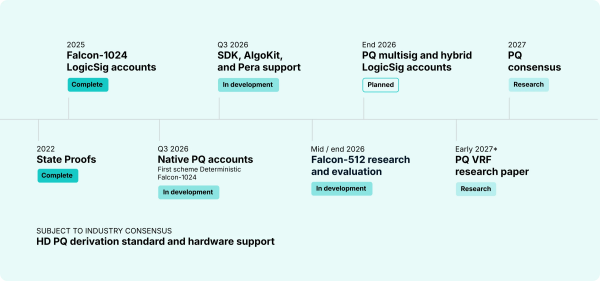
Algorand plans to introduce quantum-resistant cryptography across its blockchain by the end of 2027.
On June 18 local time, blockchain media outlet Decrypt reported that the Algorand Foundation unveiled a migration roadmap to prepare for quantum-computer attacks, spanning everything from user accounts to wallets, institutional custody systems and the network’s core infrastructure.
The plan centers on changing both the account system and the network security structure. The Algorand Foundation plans to introduce new quantum-resistant accounts based on Falcon and also support hybrid accounts that use existing cryptography together with quantum-resistant signatures. It also included multisignature wallets and institutional custody systems in the migration scope.
Bruno Martins (브루노 마르틴스), the Algorand Foundation’s chief technology officer, said the roadmap reflects a view that security should be designed to meet future standards. He said the first milestone would begin in 2026 and aims for broad deployment by the end of 2027. He said it would create an environment in which users, developers and institutions can build on the network with trust now and in the future.
Martins said the Algorand Foundation, as a steward of a global blockchain network, views the threat seriously and has continued research and preparation for years. He added that with uncertainty still remaining, pushing forward a transition blindly could also bring major trade-offs.
Algorand also plans to revise the cryptographic structure that protects the network itself, not just user accounts. It is pursuing a plan to replace the random number generation system used to select validators with a quantum-resistant method and is also reviewing alternatives to the existing signature system. As a result, the transition is expected to lead to a structural overhaul that includes consensus infrastructure rather than a simple wallet feature addition.
Quantum computers have not yet reached a level where they can actually break the cryptographic systems of bitcoin or other major blockchains, but the industry is speeding up pre-emptive responses. Amazon, IBM and Google are also pursuing a quantum-resistant transition with a 2030 target, and blockchain projects are likewise expanding related preparations.
The market is also reacting to quantum-resistant blockchain technology. Algorand token ALGO surged more than 40 percent after Google’s AI research team mentioned actual deployment of Algorand’s quantum-resistant protocol in April. That showed investors are paying more attention to real network adoption than to proof-of-concept alone.
Amid the trend, discussion in the industry of a so-called Q-Day is also spreading. It refers to the point when quantum computers can break the cryptographic systems protecting cryptocurrencies and derive private keys from public keys to steal funds. The debate grew after France’s cybersecurity agency said this week it would stop certifying products that do not support quantum-resistant cryptography from 2027.
Other blockchains have also moved to respond. Stellar developers earlier this month unveiled a three-stage transition plan to shift the network to quantum-safe cryptography while keeping existing wallet addresses. Bitcoin developers are also reviewing a transition framework and BIP-360-based experiments that include a plan to ultimately freeze coins that are not moved to quantum-resistant addresses. Ethereum researchers have also started drawing up an official post-quantum plan.
While agreement is growing that a quantum-resistant transition is needed, implementation methods and cost burdens remain challenges. Charles Hoskinson (찰스 호스킨슨), Cardano’s founder, has also acknowledged the need for quantum-resistant systems while noting potential trade-offs in performance and infrastructure.
Algorand says it cannot delay preparations any longer even with those constraints in mind. Martins said that if someone is in the blockchain industry but has not started post-quantum preparations yet, they should start immediately. Whether the first application in 2026 and the full rollout target by the end of 2027 will actually be met will be a point to watch.
 Yoonseo Lee
yslee@d-today.co.kr
Yoonseo Lee
yslee@d-today.co.kr