
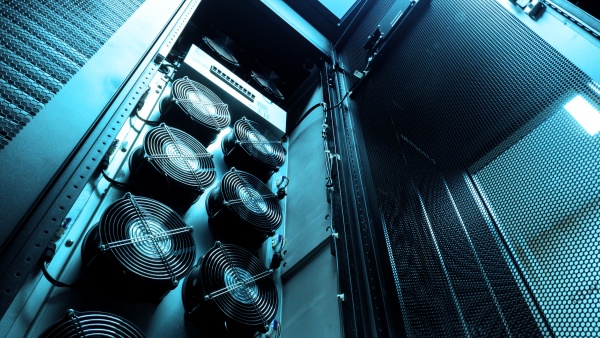
As the spread of artificial intelligence (AI) drives a sharp rise in data-centre power consumption, U.S. startup Fervet has unveiled a next-generation liquid cooling solution inspired by thermal management technology used at nuclear power plants. The company aims to reduce the power burden of AI data centres by immersing servers in a special liquid and improving cooling efficiency using microscopic bubbles generated as the liquid boils.
On June 18 (local time), IT outlet TechRadar reported that Fervet recently introduced its Adaptive Phase Change Cooling (APC) technology.
The core of the technology is direct use of liquid instead of conventional air cooling. Typical data centres cool heat generated by servers using fans and air-conditioning equipment. APC, by contrast, directly immerses servers in a special liquid and rapidly removes heat using tiny bubbles formed on chip surfaces.
As heat from the chips boils the liquid, small bubbles form. The cycle repeats as the bubbles detach and condense again in the liquid. The company says this boosts heat-transfer efficiency and can handle more heat than existing cooling methods.
Fervet said the technology began with research into subcooled boiling, which improves cooling efficiency inside reactors. Co-founder Reza Azizzian (레자 아지지안) said, "When I first visited a data center in 2017, I felt the current cooling methods were inefficient." He added, "Air-cooling systems can account for up to 40 percent of a data center’s total power consumption, but there has been no major change for decades."
The company stressed that the cooling liquid used does not include PFAS (per- and polyfluoroalkyl substances). PFAS are used in some advanced cooling technologies, but have raised concerns about environmental pollution. It also designed the APC system in a modular structure at the level of a single server, increasing flexibility in installation. Azizzian said, "By using the physical properties of liquids, new data-center designs that were previously difficult to implement have become possible."
The company also presented performance gains. Fervet claimed that in a recent evaluation conducted jointly with researchers at the University of California, Los Angeles (UCLA), the APC technology improved computing power efficiency by about 15 percent compared with existing major liquid-cooling solutions. It said combining the system with control software could generate up to 35 percent more tokens for AI workloads with the same power.
The company provides not only cooling equipment but also a data-centre operations platform. The products include server racks and cooling distribution units, various sensors and real-time monitoring software.
Co-founder Matteo Bucci (마테오 부치) said, "Software analyses temperature and pressure data in real time to reduce unnecessary energy consumption." He added, "Liquid is a much better heat-transfer medium than air, and phase change maximises heat-removal efficiency."
The technology is drawing attention amid a surge in power demand from AI data centres. Industry estimates show U.S. data-centre power consumption could rise to 9 to 17 percent of total U.S. electricity use by the late 2030s. Even now, a significant share of data-centre electricity use goes to cooling AI processors and high-performance computing systems.
Fervet believes lowering power demand and using a design that does not use any water could broaden the feasibility of building new facilities in regions short of power and cooling resources. The company pointed to potential use in places such as Africa, the Middle East and parts of the United States that have abundant solar resources but lack water.
Fervet is currently conducting technology verification with cryptocurrency mining company CleanSpark, AI semiconductor company FuriosaAI and data-centre operator Switch. It is also participating in Nvidia’s startup support programme Inception.
The industry is watching how much Fervet’s technology can solve power and cooling issues, which have emerged as key challenges for AI data centres, in real operating environments.
As AI models grow larger and cooling efficiency becomes a key element of data-centre competitiveness, whether next-generation liquid cooling can be commercialised is expected to emerge as a major variable in the future AI infrastructure market.
 Jinju Hong
hongjj@d-today.co.kr
Jinju Hong
hongjj@d-today.co.kr