
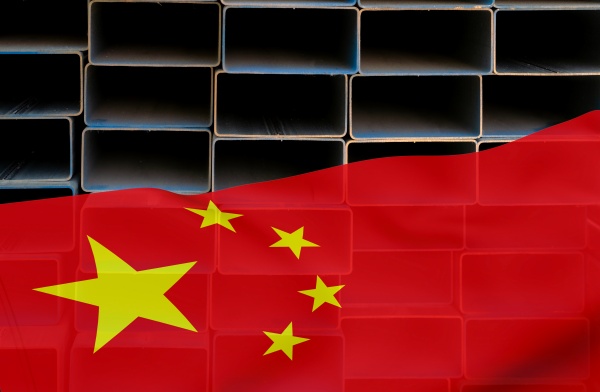
As China’s era of large-scale construction led by infrastructure and property draws to a close, an analysis said existing outlooks for global steel and cement markets need to be revised. With China’s construction demand, which has driven global raw-material demand for decades, entering a structurally slower phase, it could have a significant impact on the broader commodities market including steel and cement.
CleanTechnica, an electric vehicle outlet, reported on June 15 that an analysis has emerged saying the long-held view that China’s large-scale infrastructure and property construction demand would remain a permanent growth engine is no longer valid.
The core issue is a change in China’s demand structure. The stage of initially building the physical foundations that support a modern economy, including housing and roads, railways, ports, power grids, water and sewage systems and industrial complexes, does not repeat once it passes. Demand then shifts from new construction to maintenance, renovation, replacement and selective expansion. The outlet described this as "first construction ends" and forecast that managing and replacing existing assets will matter more than a surge in materials demand on the scale of the past.
China has been regarded as the country that has determined the direction of global commodities markets over the past decades. Large-scale urbanisation, state-led investment, a property-driven growth strategy and an expanding manufacturing sector combined to sharply lift demand for steel, cement, coal, iron ore and construction equipment.
Even now, China accounts for about half of global consumption of steel and cement. The analysis starts from the premise that the property and infrastructure-led growth model that created that position has already entered a downtrend.
Various indicators also show a shift. China’s population has already entered a declining phase and the pace of household formation is also slowing. Real estate housing starts area, the scale of land sales, developers’ financial conditions and homebuying sentiment are also showing a different trend from the past growth period. The outlet defined this as structural change rather than a simple business cycle.
In the steel market, the difference is even clearer. The World Steel Association said China’s crude steel output in 2025 reached 960.8 million metric tons. That is about 6 times India’s 164.9 million tons, the world’s second-largest producer. It means that even if India grows rapidly, it would be difficult to fully replace the decline in China’s demand.
The cement market is similar. The International Energy Agency said China accounted for about 51 percent of global cement output as of 2022. Cement is the most used material in large-scale urbanisation, including roads and bridges, subways, ports, dams and water and sewage facilities. The outlet said it does not see a "second China" that could absorb a decline in China’s cement demand on the same scale.
The report said expectations for growth in emerging markets also need to be reviewed. Indonesia, African countries and those in Central and South America still need to expand housing, power grids, and transport and logistics infrastructure. Their growth models differ significantly from China’s. It said a larger services sector, growth in the digital economy, capital constraints and climate risks are already changing development paths.
India is often cited as the most likely alternative, but the outlet said, "India is not China in 2005 with a different flag." While large-scale investment is underway in railways, roads, power grids, renewable energy and data centres, India’s urbanisation model, land system, industrial structure and financing environment are fundamentally different from China’s. Steel and cement demand will rise, but it judged that India is unlikely to recreate the level of commodities consumption China once showed.
As a result, long-term outlooks are also changing. The outlet suggested the possibility that global crude steel demand could stagnate or decline at about 1.6 billion tons a year through 2050. It said simply applying China’s past material intensity to population growth and economic expansion as before is far from reality.
Cement is no different. Demand is likely to shift away from China-style large-scale new construction toward low-carbon alternative materials, improved design efficiency and maintenance-focused structures.
These changes will not affect only steel and cement. The analysis forecast that a wide range of industries that grew by relying on China’s construction boom could be affected, including coal and iron ore, bulk shipping, construction equipment, industrial heat sources and diesel logistics demand. The outlet said, "China has accounted for more than half of the story in key materials markets" and added, "the rest of the world is not China 20 years ago." It warned that existing approaches that have calculated future commodities demand based on China’s construction boom may no longer work.
 Jinju Hong
hongjj@d-today.co.kr
Jinju Hong
hongjj@d-today.co.kr