
Womenswear brand Maryet has succeeded in building its brand by making 90 percent of its products in-house. After starting as a blog market and growing into its own online mall over six years, it linked sales and inventory data using Cafe24’s inventory-linked product analysis service, lifting advertising efficiency as well.
Maryet pursues designs that look styled yet understated in everyday life, using “simple Maryet” as a keyword. It says it aims for clothes that do not become tiresome even after long wear, rather than overly elaborate designs. CEO Yoo Ji-su (유지수), who runs Maryet, said the goal is for Maryet to establish itself as a fashion brand.
Yoo had a strong interest in fashion, enough to consider starting a shopping mall with a friend while in college. Yoo worked part-time selling clothing at an offline store run by an online shopping mall brand and learned the structure of online commerce on the ground by accompanying visits to the Dongdaemun apparel market. “What I experienced in the field at the time became the foundation for Maryet’s growth,” Yoo said.
The commerce business began as a blog market. As orders increased and operating infrastructure such as a payment system failed to keep up with demand, it opened its own online mall. The brand name Maryet is based on August, which has meaning for Yoo. “I wanted to make clothes that you can pull out and wear in a good mood even if it is not a special day, and I put that wish into the brand name,” Yoo said.
At one point it tried designs that deviated from its existing style, but products that drew strong responses were those that carried Maryet’s distinctive mood. A purchasing pattern favouring the brand identity was clear among early blog-market customers, and that trend held even as new customers came in. It now has 128,000 Instagram followers.
Self-made products drive “set-up purchases”; capri pants reordered 15 times
At the centre of maintaining a consistent mood across products are items made in-house. Since this year it has been launching 1 to 2 items a week. Sales data show customers tend to complete coordinated sets centred on in-house products. Customers who buy an in-house top, for example, also choose in-house products when adding bottoms.
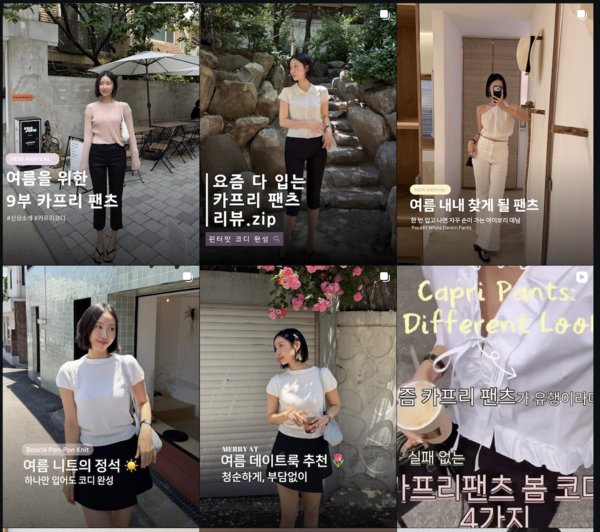
Pants show the clearest response. A basic-length capri pants item has logged 15 rounds of reorders, and it later expanded the line with a longer-length version. Pattern design reflecting detailed body measurements such as the knees and hips is assessed as delivering a strong figure-shaping effect for the lower body. Another strength is that, with in-house production capabilities, it can quickly launch follow-on lines for products with confirmed demand.
It raised operating efficiency by using Cafe24 solutions. Maryet linked inventory and sales data using Cafe24’s inventory-linked product analysis service, then selected products with verified early response as key operating items and ran focused advertising. It is a way to grow scale steadily while maintaining advertising efficiency based on inventory conditions.
“The goal is to fill the entire product lineup with in-house production,” Yoo said. “We are putting Maryet’s identity into each item, item by item, toward the direction of establishing the name Maryet as a brand.”
 Seok Dae-geon
d2dg@d-today.co.kr
Seok Dae-geon
d2dg@d-today.co.kr