
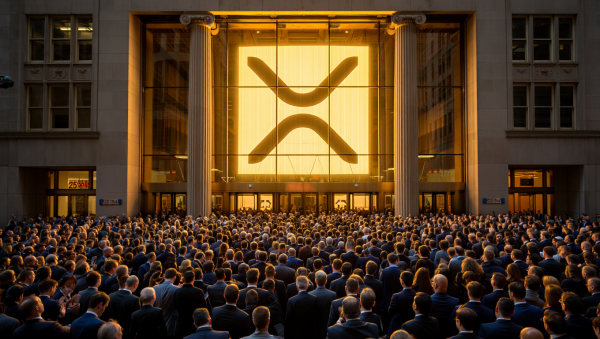
Ripple has set a target of reaching $1 billion in recurring operating revenue by the end of 2026, excluding sales or holdings of the XRP token.
U.Today, a blockchain outlet, reported on June 14 that Ripple CEO Brad Garlinghouse (브래드 갈링하우스) made it clear the company will separate its commercial performance from XRP's price.
Garlinghouse said he expects the company to reach a revenue run rate of about $1 billion by the end of 2026, and that the figure does not include XRP on the balance sheet. He said this means Ripple is not structured to rely on rising cryptocurrency prices, but to generate revenue through a traditional fintech business model that sells software and financial infrastructure.
Ripple pointed to its 2026 first-quarter performance trend as the basis for the target. Ripple's enterprise value jumped to $50 billion in the first quarter, and the launch of its brokerage service, Ripple Prime, also affected performance growth. After integrating with the Hidden Road platform, related revenue tripled.
Ripple's core customer base is not individual investors but treasury departments at large corporations. Treasury officials at Fortune 500 companies use Ripple's payment network, and funds moved through that infrastructure have exceeded $100 billion. These customers manage currencies and liquidity in a single application.
Beyond payment infrastructure, Ripple is also accelerating the expansion of its dollar stablecoin RLUSD. RLUSD rose into the top five by market growth rate in 18 months. It also released an AI starter kit based on the XRP Ledger. Ripple has set out a plan to be among the first providers to accommodate automated payments by AI robots through the tool.
It is also pursuing policy responses. Garlinghouse is actively lobbying in Washington for passage of the Clarity bill. He argued that with only about 16 days left in the legislative schedule before Congress recesses in August, clear rules could change a situation in which large banks hesitate to pursue crypto businesses over litigation risk. He also said crypto activity would return to the United States rather than remain in offshore markets.
The market is also paying attention to the divergence between Ripple's core business and XRP's price moves. XRP fell in early 2026, but Ripple's business indicators hit record highs. For the company, proving it can generate $1 billion regardless of exchange prices has become a key task.
As a result, Ripple's 2026 strategy is read as having four main tracks: expanding its corporate payments network, growing its brokerage business, expanding RLUSD and advancing U.S. regulatory clarity. If Ripple completes a revenue structure separated from XRP, it is expected to become a case for judging whether crypto companies can be valued based on financial services revenue rather than token prices.
 Jinju Hong
hongjj@d-today.co.kr
Jinju Hong
hongjj@d-today.co.kr