
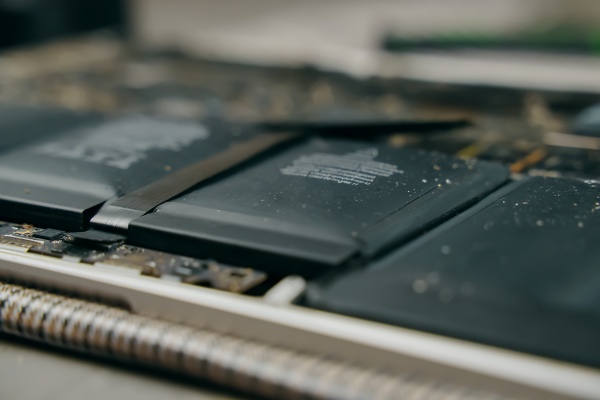
As the European Union (EU) prepares to enforce new battery rules that let users replace batteries themselves, design changes in the electronics market are gathering pace. The shift is appearing first in peripherals such as headphones, e-readers and handheld game devices rather than smartphones, and global manufacturers are speeding up product development to match.
On May 31, local time, IT outlet The Verge reported that the EU will require many portable electronic devices with batteries to be designed so users can remove and replace batteries themselves from Feb. 18, 2027.
The new rules apply broadly, including to headphones, e-readers, handheld game devices and laptops. Manufacturers must not only provide a structure that allows battery replacement, but also sell compatible batteries for at least 5 years.
The rules require devices to be easy to disassemble. Covers do not necessarily have to be opened by hand, but the design must be accessible with a standard screwdriver, and designs requiring special equipment or complex disassembly are not allowed.
Smartphones and tablets, however, are subject to separate exceptions. Under related rules enacted in 2023, the EU set standards for battery durability and water resistance for smartphones and tablets. If a battery retains at least 83 percent of its initial capacity after 500 charges and at least 80 percent after 1,000 charges, and the device meets IP67-level water and dust resistance, manufacturers do not have to adopt a user-replaceable battery structure. For this reason, there is analysis that it is unlikely the method of opening the back of a smartphone and immediately swapping the battery, as in the feature-phone era, will become widespread again.
The market is already showing signs of change. Fender has applied a battery access structure to its recently introduced Mix headphones, and Sennheiser designed its Momentum 5 headphones so the battery can be replaced with only a Phillips screwdriver.
Fairphone, known for repair-friendly smartphones, has long maintained a removable battery strategy. It is applying user-replaceable batteries to its latest Fairphone 6 as well as its wireless earbuds, Fairbuds.
Aron Brandt (알론 브랜트), Fairphone's head of external cooperation, said, "We have focused on repairability and extending product lifespan from day one." He said, "The new EU rules are not a goal for us, but closer to a basic starting line."
Large IT companies are also moving to respond. Amazon is known to be considering removable batteries for the next-generation Kindle e-reader. Leaked images of Microsoft's next-generation Xbox Elite 3 controller are also reported to include a user-replaceable battery structure. Nintendo is also being discussed as possibly applying a detachable battery to the Switch 2 for the European market.
There are also plenty of variables. Some manufacturers may design separate products for the EU and non-EU markets. Conversely, cases are also emerging in which companies delay European launches of certain products due to the burden of responding to the rules. Meta is known to have postponed the European launch of some Ray-Ban smart glasses models due to issues related to meeting the battery rules.
The industry is viewing wireless earbuds and wearable devices as the biggest challenge. Smartwatches, fitness trackers and smart glasses have limited internal space, so separate exceptions are being considered. Wireless earbuds, by contrast, are currently included under the rules. With batteries, antennas, processors, drivers and microphones all needing to fit inside a small body, some point out that adopting a replaceable design could increase both product size and price.
Another variable is that interpretation of the rules has not been fully settled. The EU stipulates that repairs must be possible with tools available on the market, but it is not clear exactly which tools will be allowed. Standards for reasonable prices for spare parts also remain subject to further discussion.
Experts say the rules are likely to have a bigger impact on the peripherals market than on smartphones. The changes are already appearing first in headphones, e-readers and game devices.
The industry is watching whether the EU rules will go beyond the European market and change the direction of global electronics design. As manufacturers prefer a single global design rather than making separate products by region, the likelihood is rising that more products will allow consumers to replace batteries themselves.
 Jinju Hong
hongjj@d-today.co.kr
Jinju Hong
hongjj@d-today.co.kr