
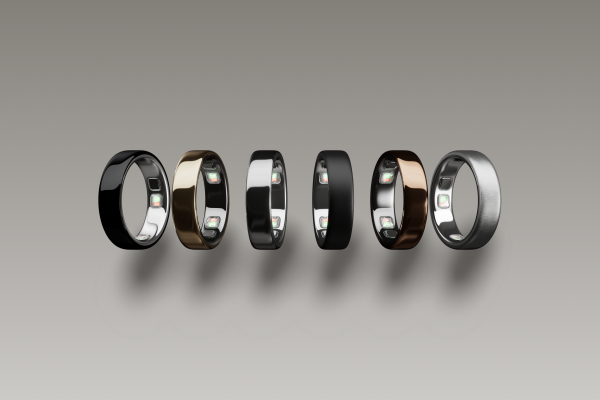
[DigitalToday reporter Jinju Hong] Smart ring maker Oura has unveiled its new smart ring, the Oura Ring 5, which it said is 40 percent smaller than the previous generation. It is focusing beyond hardware miniaturisation on AI-based health management features and an expanded subscription service, reinforcing its wearable healthcare platform strategy.
On May 28, CNBC reported that Oura said the Ring 5 is among the smallest smart rings currently on the market. The product will begin shipping on June 4. The base finish model costs $399, while premium finishes such as gold and brushed silver cost $499, or about 750,000 won. A portable charging case is also sold separately for $99, or about 150,000 won.
The key feature of the Oura Ring 5 is that it significantly reduces size while maintaining the sensing accuracy and health-tracking performance of the previous generation. Tom Hale (톰 헤일), Oura's chief executive officer, said, "We combined a smaller, easier-to-wear design with the most advanced software." He said the goal is to enable more users to wear Oura daily and receive personalised, predictive health insights.
Oura also significantly strengthened health management features alongside the new product. A flagship feature is Health Radar. It detects signs of physical abnormalities based on key biometric signals such as body temperature and respiratory rate, and alerts users when meaningful changes are found.
It also added a feature to track blood pressure patterns during sleep. The company said this can help detect early warning signs of cardiovascular risk. It also supports tracking nighttime breathing patterns and breathing interruptions during sleep, and improved real-time workout tracking for activities such as running and cycling.
Features targeting people taking weight-loss drugs also drew attention. Through its GLP-1 Insights feature, Oura enables users to analyse medication schedules, weight changes and biometric data together. It is seen as a strategy to expand its business scope beyond wearable devices to a personal health management platform.
It is also pushing to expand AI-based healthcare functions. Oura is introducing an AI consultation linkage feature in cooperation with on-demand medical platform Counsel Health. Users can ask health-related questions in the app, receive tailored advice and then be connected to a medical service provider. The feature is available in 43 U.S. states.
Oura's business direction is rapidly shifting from a simple sleep-tracking device to a prevention- and prediction-focused health management service. The company said cumulative sales since September last year have surpassed 5.5 million units. That is more than double the 2.5 million units as of June 2024.
Its paid membership base is also expanding. Oura forecast that paid members will exceed 5 million this quarter, and said paid memberships and revenue each grew fourfold over the past 2 years. Hale previously mentioned late last year that Oura's annual revenue could come close to $2.0 billion as of 2026.
Against this backdrop, Oura is also preparing for a listing. Oura recently began preparations by confidentially submitting a draft initial public offering registration statement to the U.S. Securities and Exchange Commission. In October last year, it secured $900 million in Series E funding, receiving a valuation of $11.0 billion.
In the industry, analysts say the Ring 5 launch could be a turning point in Oura's strategy, going beyond competition for smaller hardware and expanding its business model into subscription-based health data services and an AI-based medical platform.
 Jinju Hong
hongjj@d-today.co.kr
Jinju Hong
hongjj@d-today.co.kr