
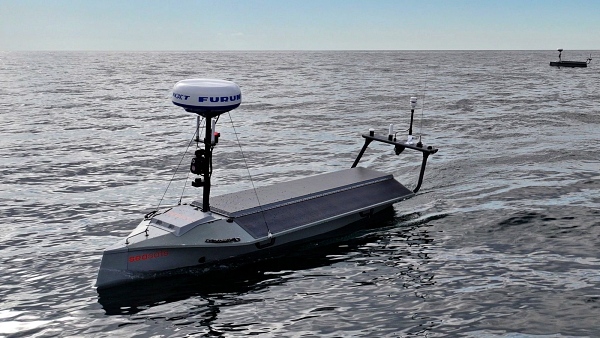
U.S. maritime uncrewed systems company Seasats said on May 27 local time it has completed the first fully autonomous crossing of the Taiwan Strait using its self-developed Lightfish uncrewed surface vessel (USV).
Lightfish was operated from a remote location hundreds of miles away. It navigated the full length of the Taiwan Strait over 5 days, covering more than 1,000 nautical miles, or about 1,800 km. It continuously monitored maritime vessel traffic throughout the voyage.
It encountered multiple warships, including a Chinese navy Type 056 patrol corvette. The vessels were sailing within Taiwan's exclusive economic zone with their automatic identification system (AIS) signals intentionally switched off. Lightfish tracked their locations and obtained photographic evidence confirming the ships' type and origin.
Seasats CEO Mike Flanigan (마이크 플래니건) said, "It is not the first time we have encountered Chinese warships, but the place and timing of this encounter are particularly notable." He added, "It is known that the People's Liberation Army deploys vessels aggressively in the territorial waters of smaller neighboring countries, but opportunities to capture and share photographic evidence containing geolocation information are rare."
Seasats cited Ukraine's rapid development of drone tactics against Russia and Iran's effective operation of uncrewed systems in the Strait of Hormuz. It said, "Taiwan is also closely studying these lessons and is making uncrewed systems a key pillar of its defense strategy." It explained that long-range, high-endurance USVs could help Taiwan monitor and defend its waters.
Seasats said it has won contracts worth more than $100 million from the U.S. government to date, and has operated USVs with the U.S. Navy, the National Oceanic and Atmospheric Administration (NOAA) and major research institutions. It said it plans to expand cooperation in earnest with Taiwan and allied forces in the Indo-Pacific region following the operation.
 Hyunwoo Choo
cookinpapa@d-today.co.kr
Hyunwoo Choo
cookinpapa@d-today.co.kr