
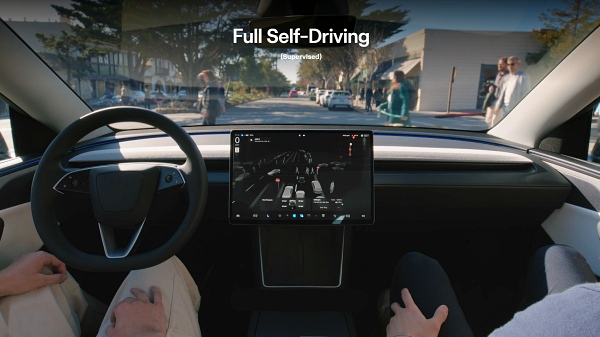
Tesla's fleet of unmonitored robotaxis in operation has recently declined.
Electric, an electric-vehicle industry outlet, reported on May 26 that Tesla operated a total of 20 unmonitored robotaxis over the past seven days. The total number of vehicles in its ride-hail service also fell to 34.
The figures were compiled based on robotaxi tracker data. By region, 14 unmonitored vehicles were confirmed in Austin, and three each in Dallas and Houston over the past week. That is down from about 25 as of late April. Austin, seen as a core operating area, fell to 14 from 19 over the past seven days, while Dallas and Houston remained at about three vehicles, the same level as when service began.
The drop in the overall ride-hail fleet was larger. Tesla has also deployed 'Full Self-Driving' (FSD) vehicles with a safety driver onboard for ride hailing in California's Bay Area, but the number of vehicles operating there plunged to nine from 107 in April. As a result, total active ride-hail vehicles fell to about 34 from 165 in April.
The operating trend is also declining after a peak. The number of unmonitored vehicles turned lower after peaking in late March to early April this year. The total number of ride-hail vehicles also steadily declined after hitting a peak between late last year and early this year. Some in the industry also analyze that the expansion of unmonitored vehicles seen in April was closer to a temporary rebound than a structural increase.
Tesla has not provided an official explanation for the fleet reduction. Safety issues are cited as a main reason. Tesla's robotaxi service currently faces several constraints, including long wait times, limited operating areas and routes centered on public roads. Elon Musk has also said in past remarks to investors that safety validation is a key limiting factor in expanding the service.
Tesla has also said it plans to aggressively expand the service after future software improvements. Musk said Tesla would expand robotaxis in earnest after applying a rewritten version of FSD v15, a next-generation self-driving software, and suggested the timing as late 2026 to early 2027. But based on operating data so far, there is also an assessment that it is moving toward reducing vehicles rather than increasing them.
The gap with competitors is also widening. Waymo is currently operating about 3,000 robotaxis in multiple U.S. cities and is handling hundreds of thousands of paid ride-hail trips per week. Waymo is also building a facility with Magna International in Arizona's Mesa area that can produce more than 2,000 additional vehicles a year. It is also preparing to enter new cities such as Atlanta, Miami and Washington, D.C. within this year.
Waymo also faces operational problems. Recently, some vehicles failed to properly detect flooded roads, leading it to temporarily suspend operations in some markets and its highway service. Even so, comparing current scale, Tesla remains at about 20 unmonitored vehicles, and some analysis says the difference is becoming clearer against Waymo, which is already expanding to several thousand vehicles.
The industry is focusing on the fact that Tesla's robotaxi business has not been able to stably maintain an unmonitored fleet of around 25 vehicles even after one year since launch. Musk is presenting FSD v15 as a solution, but the market is also raising an assessment that it is closer to an unproven 'bet on the future.'
 Jinju Hong (홍진주)
hongjj@d-today.co.kr
Jinju Hong (홍진주)
hongjj@d-today.co.kr