
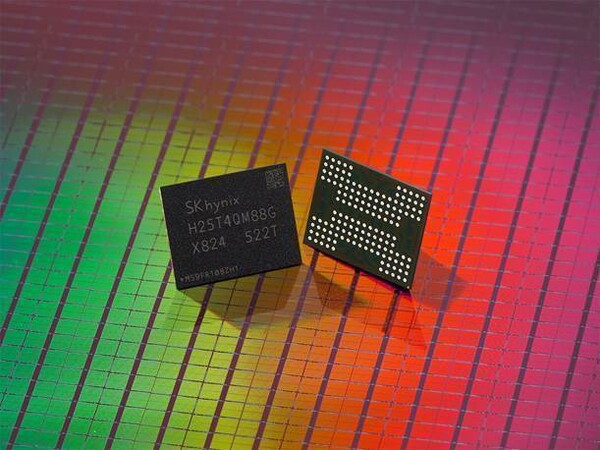
As AI inference spreads, cold data is surging and HDD supply lead times are lengthening. With HDD replacement difficult and a NAND supply crunch adding pressure, development of QLC SSDs with a high-capacity, low-cost structure is being spurred. As a reshaping of demand in the storage market gathers pace, signs of change are also being detected across related supply chains.
As AI inference infrastructure expands, conversation histories and contextual data that require long-term retention build up quickly. Cold data storage is typically handled by HDDs, but the surge in demand is also lengthening HDD supply lead times. iM Securities analysed that big tech companies are reviewing a method of storing customer context long term on NAND-based storage servers instead of expensive GPU servers as a realistic alternative. QLC SSDs have a low cost per unit of capacity, making them suitable for large-scale cold data storage. A structural advantage is cited in that they can replace HDDs while maintaining cost efficiency under NAND supply constraints.
The demand shift is also confirmed by export data. In April, the average daily SSD export value on business days rose 717 percent from a year earlier to $170 million. That far outpaced the 289 percent increase in exports of standalone NAND over the same period. If standalone NAND is centred on supply transactions between manufacturers, SSDs are end products that data centre operators buy directly. The surge in SSD exports can be seen as big tech and cloud operators moving in earnest to expand storage infrastructure.
At the root of the accelerating shift in demand toward QLC SSDs is a surge in demand for KV cache generated during the AI inference process. According to iM Securities, data that used to be stored in 16-bit units in HBM has filled KV cache and occupied a significant portion of HBM capacity. TurboQuant, a quantisation compression technology that Google applied in part to Gemini 3.0, succeeded in compressing this data to 3 bits, cutting KV cache occupancy to less than one-sixth. Dependence on HBM can be reduced, but the compressed data must ultimately be stored somewhere. That demand is concentrating on NAND.
According to DRAMeXchange, NAND spot prices rose by as much as 80 percent over six weeks since late February. DS Investment & Securities analysed that NAND contract prices in the first quarter rose 55 to 60 percent from the previous quarter and estimated Samsung Electronics' first-quarter NAND operating profit margin at 53 percent. It is a view that NAND, following DRAM, has entered a phase of improving profitability. The structure makes it inevitable that supply-side responses will be delayed. According to SK Securities, NAND manufacturers have focused over the past 2 to 3 years on output cuts and conversion investment, and wafer capacity naturally declined during the process of shifting to higher-layer technologies.
AI inference spread reshapes the storage device supply chain
New domestic NAND investment is physically impossible, and Samsung Electronics and SK hynix are expected to prioritise use of their China fabs. Samsung Electronics' Xi'an Fab 1 has completed a conversion to V8 and is preparing a ramp-up in the second half, while SK hynix's Dalian Fab 2 is expected to execute new investment of 30,000 to 50,000 wafers in the second half. Micron's Singapore fab and Samsung Electronics' P5 are both set to contribute to mass production in the second half of 2028.
With the timing of new fabs' mass production contributions for major manufacturers concentrated in 2027 to 2028, a reshaping of storage demand centred on QLC SSDs is expected to accelerate further while a tight supply-demand stance continues. An industry official said, "It will be difficult to achieve meaningful supply increases in the short term until the expansion timing," and added, "NAND price rises will continue."
 Daegeon Seok
d2dg@d-today.co.kr
Daegeon Seok
d2dg@d-today.co.kr