
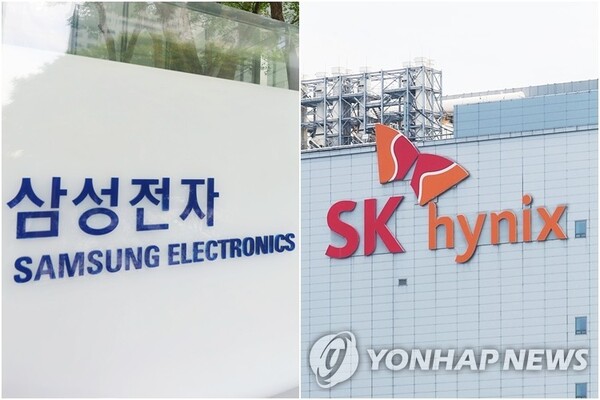
South Korean financial authorities urged caution ahead of the listing of single-stock leveraged exchange-traded funds (ETFs) and exchange-traded notes (ETNs) that use Samsung Electronics and SK Hynix as their underlying assets. Because the structure concentrates investment in individual stocks and amplifies gains and losses twofold, investors need to understand the products and check the risks, they said.
The Financial Services Commission, the Financial Supervisory Service and the Korea Financial Investment Association provided investment precautions ahead of the listing of single-stock leveraged products on May 27.
The authorities stressed that because the products can amplify gains and losses with a small investment, they are not suitable for investors with low loss-bearing capacity or limited understanding of investment risks. Investors should invest at their own responsibility within their own loss limits, they said.
The products being launched include 16 ETFs and 2 ETNs. Eight asset managers will launch the ETFs: Samsung Asset Management, Mirae Asset Global Investments, Korea Investment Management, KB Asset Management, Shinhan Asset Management, Hanwha Asset Management, Kiwoom Asset Management and Hana Asset Management.
Of the 16 ETFs, 14 are two-times long products and 2 are two-times inverse products. By underlying asset, 8 are tied to Samsung Electronics and 8 to SK Hynix.
For ETNs, Mirae Asset Securities will launch 2 two-times long products using Samsung Electronics and SK Hynix as underlying assets.
The authorities said investors should first be mindful of the risks of concentrated investment in a single stock. Unlike general funds based on indices, single-stock-based products do not provide diversification and are directly exposed to individual company risks.
Samsung Electronics and SK Hynix products can see large price moves depending on the global semiconductor industry cycle and related events.
There is also a high risk of amplified losses due to the leverage structure. Because single-stock leveraged products track a multiple of the daily return of the underlying stock, large losses can occur in a short time if the share price moves against investors' expectations. Given that the daily price limit for domestic stocks is 30 percent, losses of up to 60 percent in a day are theoretically possible.
Investors should also watch for negative compounding effects. If the underlying stock price repeatedly rises and falls, investment in a leveraged product can shrink even if the underlying asset price returns to its original level.
For example, if the underlying asset rises 30 percent and then falls 30 percent, a regular product posts a 9 percent loss, but a two-times leveraged product results in a 36 percent loss.
Investors should also check the tracking gap before investing. A difference can arise between an ETF's net asset value (NAV) or an ETN's indicative value and its market trading price due to a temporary supply-demand imbalance or a lack of liquidity.
The authorities said investors should check tracking-gap information through exchange statistics sites to avoid unnecessary losses from buying temporarily overvalued products.
New investors must also complete prior education. To invest in single-stock leveraged products, investors must complete a total of 2 hours of mandatory online education, including 1 hour of general training and 1 hour of advanced training. They must also deposit at least 10,000,000 won as a basic deposit.
From April 28, when advanced training began, to May 21, 100,000 prospective investors applied and 93,000 completed the advanced training. The daily average number of completions was 3,880.
The FSS and the association plan to make it easy to check product structures and risks on securities firms' websites and mobile apps after the products are launched.
The FSS said it will strengthen monitoring of trading trends, tracking gaps and volatility trends related to single-stock leveraged products, and will guide the market to prevent exaggerated advertising that could mislead investors.
 Sangyeop Oh
yub@d-today.co.kr
Sangyeop Oh
yub@d-today.co.kr