
[DigitalToday reporter Hojeong Lee (이호정)] Platform companies in South Korea and overseas are increasingly strengthening identification technologies to secure user trust and protect creators' rights as AI content spreads.
AI videos labelled on 5 billion TikTok posts... now users can check directly
The industry said on Nov. 30 that TikTok announced new tools in South Korea on Nov. 23 to boost transparency for AI-generated content. The tools let users directly check whether an image or video they encountered online was created or edited using TikTok's AI production features.
TikTok has so far labelled more than 5 billion AI-generated videos. In 2024 it also introduced content credentials based on C2PA, an international standard technology that records a content production history. But the information could disappear when content is downloaded or shared and edited on other platforms.
To address this, TikTok introduced a verification tool that uses both C2PA-based content credentials and its self-developed invisible watermarking technology, VeraDura. VeraDura inserts identification information that is not visible to the human eye into content, making it harder to remove than existing production-history information. Users without a TikTok account can also upload an image or video to the Transparency Center to check it.
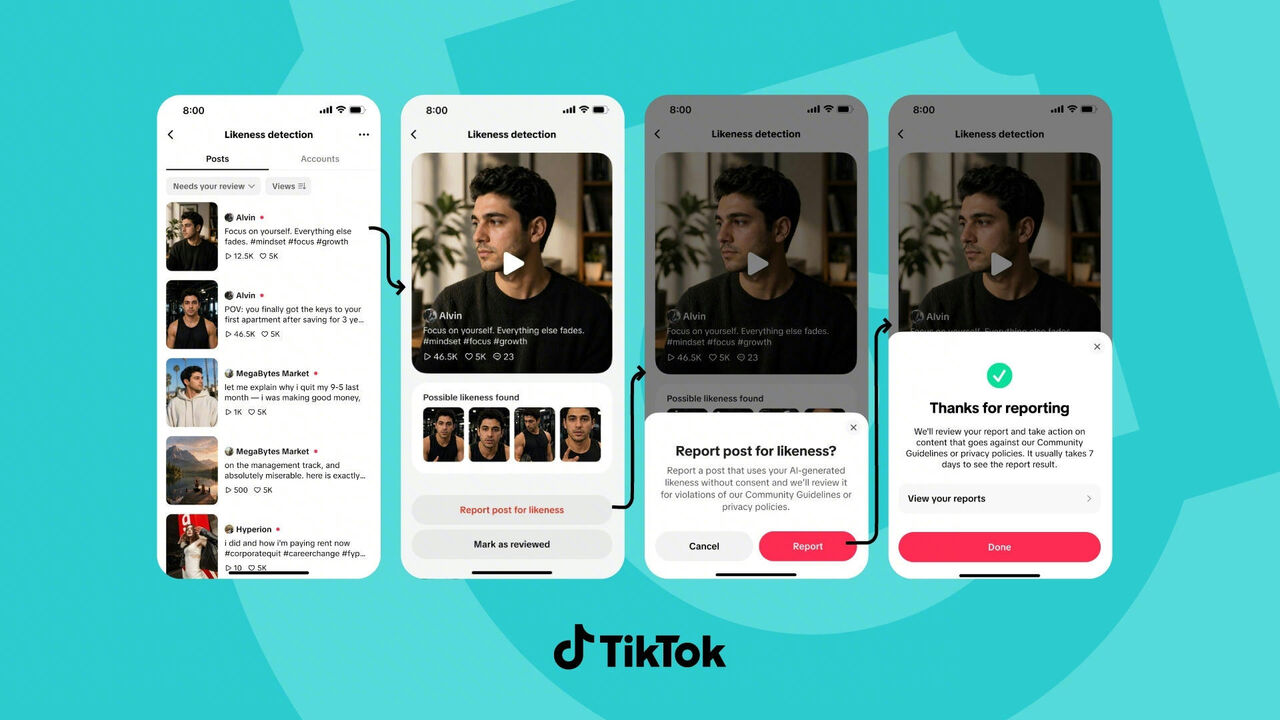
It is also strengthening creator protection features. TikTok is rolling out globally from this month a feature that lets creators and public figures who meet certain requirements find and report AI content that may have used their likeness without consent.
TikTok is also offering a feature that allows users to adjust the amount of AI-generated content shown in recommendation feeds. It goes beyond indicating whether content is AI-generated by letting users directly manage the level of exposure to related content.
Google watermarks 180 billion images and videos... expanding cooperation between companies
AI content identification technology is expanding beyond individual company services into cooperation between companies.
Google expanded last month the public release in English of its AI content verification tool, SynthID Detector, to general users worldwide. The tool allows users to upload image, video and audio files and check whether a SynthID watermark has been inserted. It is also widening the scope of identification through cooperation with other tech companies such as OpenAI, Nvidia, Kakao and Apple, as well as Google.
Google said more than 180 billion images and videos have a SynthID watermark applied. Existing content verification features built into Search, Gemini and Chrome also handle more than 1 million verification requests a day.
Platforms that distribute content are also introducing automatic detection technology beyond creators' voluntary disclosure of AI use.
YouTube began introducing in May a feature that automatically applies labels when it detects AI has been used substantially in realistic-looking videos, even if a creator does not disclose AI use. It is also pursuing a plan to expand existing face-focused portrait-rights detection features to voice.
Meta, which operates Facebook and Instagram, also introduced a research detection tool that can check whether an image was created with its AI. In July it said it planned to sign a European Union code of practice related to transparency for AI-generated content.
AI labelling expands to shopping... Naver and Kakao also respond
In South Korea, the scope of AI content management is expanding beyond user posts into product sales. Product images created or modified with AI can affect consumers' purchase decisions.
Naver operates features on Blog, Cafe and Clip that allow authors to indicate whether they used AI. From July 10 it also applied AI-generated content usage standards to SmartStore. It later adjusted related standards, including easing restrictions on the use of AI-generated content for some product categories while requiring AI use to be indicated.
Kakao also provided guidance in August to sellers on shopping services on labelling and advertising standards related to AI-generated content. It said if AI-generated images are markedly different from the actual products for sale or mislead consumers about product quality or efficacy, they may constitute false or exaggerated advertising. On Nov. 26 it also notified sellers of standards banning advertising that uses AI virtual experts following amendments to laws under the Ministry of Food and Drug Safety.
Kakao is also pursuing technical measures. In May it announced plans to apply SynthID watermarks from the second half of this year to its own image generation model, Kanana Collage, and video generation model, Kanana Kinema, in cooperation with Google DeepMind. Google also listed Kakao as a partner when it expanded the public release of SynthID Detector last month.
Changes in regulatory environments in each country are also increasing the importance of AI content identification. In South Korea, the AI basic law took effect in January, imposing an obligation on businesses providing generative AI products and services to label AI-generated content.
Still, it is difficult to distinguish all AI-generated content with watermark-based identification technology alone. Whether content was generated by AI and whether the content is factually true are separate issues.
An industry official said, "AI technology is lowering the barriers to entry for content production, but if it becomes harder for users to know the source of content and how it was made, trust in platforms could also fall." The official added, "Since we must pursue both the activation of AI-assisted creation and user protection, the importance of technologies to identify content and secure transparency will grow further."
 Hojeong Lee
lhj@d-today.co.kr
Keyword
#TikTok #C2PA #VeraDura #Google #SynthID Detector
