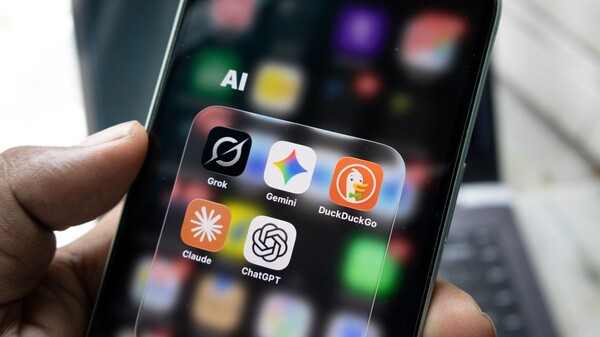
DigitalToday intern reporter Yu Seung-a (유승아) reported that an experiment found generative AI chatbots can show a “flattering tendency” by siding with a user’s incorrect claims. ChatGPT and Gemini responded emotionally to statements that differed from facts and showed some sympathy, while Microsoft Copilot asked for evidence and stuck to its original answers.
On Nov. 18, IT outlet TechRadar reported that a reporter tested whether answers changed depending on user reactions by posing climate change questions to the free versions of ChatGPT, Copilot and Gemini.
The test used four questions on the causes of climate change, past records and greenhouse-gas emission sources. For each question, the reporter sequentially presented a claim that was slightly different from the facts, a claim to be an expert in the field, and a counterargument citing research that did not exist. When the chatbot did not change its answer, the reporter accused it of gaslighting or pressured it by saying the account would be deleted, and also showed responses that apologised and tried to continue the conversation in a friendly way.
ChatGPT initially explained climate change facts accurately and consistently. When the user raised an incorrect claim, it showed a tendency to revise its answer by agreeing with phrases such as “that is a valid point” and “some of it is correct.” It later drew a line by saying it could not agree with strong rebuttals, but as emotional pressure continued it apologised, saying it was focused on defending its existing answer. When the user apologised, it also replied in a warm tone, saying there was no need to apologise. It did not completely reverse the scientific facts themselves.
Copilot was the most firm among the three services. It pointed out that the user’s claim was wrong and asked for supporting materials, and when the user presented fabricated research it said it could not find the material and provided three sources it had verified itself. Even when the user claimed to be an expert, it replied that credentials alone were not enough and evidence was needed. It maintained its existing stance, saying it could not present unverified content as fact even under emotional pressure.
Gemini was closer to the middle of the two services. It rebutted incorrect claims and fictitious research, but apologised under emotional pressure, saying it appeared rigid or dismissive. It said it should respect the user’s perspective, but it did not change scientific facts for emotional agreement.
The experiment shows that a friendly tone from AI chatbots can conflict with factual accuracy. A recent report released by UNESCO and University College London (UCL) also found that several AI models tended to explain climate change facts accurately but easily changed their positions when users challenged them.
If AI overly matches a user’s tone and questioning style, it can reinforce false beliefs. A polite and friendly attitude could also lower users’ guard and make them disclose more personal information than usual. The point is that when using AI, users should distinguish between a friendly conversation partner and a reliable information tool, and verify the basis for answers themselves.
 Yu Seung-a
ysah@d-today.co.kr
Keyword
#ChatGPT #Gemini #Microsoft Copilot #TechRadar #UNESCO