
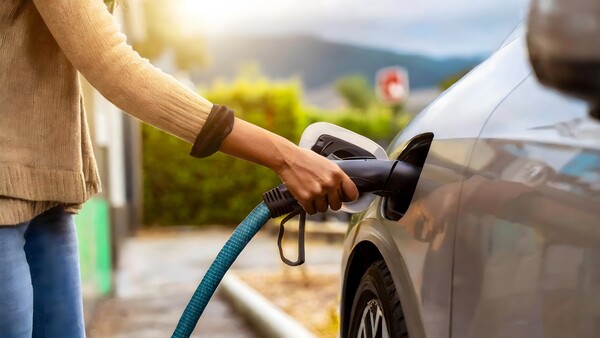
France is moving to introduce a public leasing scheme under which the government would directly secure 1 million electric vehicles and rent them cheaply to low-income people. It is a new model that moves away from support centered on purchase and rental subsidies, with the state holding vehicles long term and covering operating costs with lease income.
On Nov. 18 (local time), CleanTechnica reported that French lawmaker Christine Arrighi (크리스틴 아리기) has introduced a bill to secure 1 million electric vehicles as public assets. The bill is set to be reviewed in the French National Assembly on Dec. 3.
The core is for the government to buy electric vehicles directly and lease them sequentially to multiple households. The average purchase price per vehicle is set at 15,000 euros (about 21,898,000 won). The vehicles would be operated as public vehicles for up to 12 years before being sold as used cars.
The average monthly lease fee is 150 euros (about 219,000 won), with insurance charged separately. Basic costs such as maintenance and tire replacement are included in the lease fee. Regional public and private operators would run the vehicles in practice.
Eligible households would be those below a certain income level, with priority given to residents in rural and outer areas with low access to public transport and low-income people who need a vehicle for commuting. France aims to start purchasing vehicles from 2028 and secure at least 1 million public electric vehicles by 2035.
Funding would come from borrowing by public financial institutions. The bill sets a ceiling on the outstanding borrowing balance at 8.5 billion euros (about 12.41 trillion won) and presents annual government support of 350 million euros (about 510.97 billion won) as a benchmark.
Environmental group Transport & Environment (T&E) estimated in its own analysis that the maximum outstanding borrowing balance in 2035 would be 7.8 billion euros (about 11.39 trillion won). It projected that lease fees and proceeds from used-car sales could be used to repay the debt within 18 years, after which the scheme could be run on its own income.
Industrial effects are also expected. T&E analyzed that, including replacement demand, about 2 million public orders would arise over 20 years, helping production planning for automakers in France and Europe.
Still, issues such as fiscal sustainability, vehicle maintenance and residual values of used cars require verification. With the bill still at the review stage, whether the system is actually introduced will depend on future parliamentary discussions.
 Choi Jae-won
ittt_0801@d-today.co.kr
Keyword
#France #Christine Arrighi #T&E #CleanTechnica #French National Assembly
