
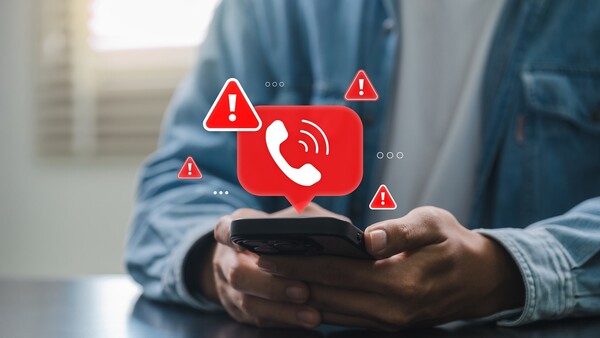
[DigitalToday reporter Jae-won Choi] Voice phishing criminals demanding that victims not hang up has been identified as a typical warning sign of fraud. The aim is to keep the call going to apply psychological pressure and prevent victims from seeking outside help or checking the facts.
On Nov. 16 (local time), IT media outlet Engadget reported that voice phishing criminals are using tactics that impersonate bank employees or people linked to investigative agencies to heighten victims’ anxiety and induce them to stay on the line.
A typical method is to pose as a bank employee and say suspicious transactions were found in an account. The criminal reassures the victim that deposits will be protected, while preventing them from hanging up and cutting off their chance to confirm directly with the bank.
They then ask for passwords or one-time authentication codes, or instruct victims to transfer funds to a safe account. Some keep the call going even while victims withdraw cash from an ATM or buy gift cards.
In August, the U.S. Federal Bureau of Investigation (FBI) warned of a new scam tactic that repeatedly impersonates financial institutions and FBI staff.
Criminals tricked victims by claiming an account opened in their name had been used to buy illegal guns, then connected them to a caller posing as an FBI agent. They later contacted the victim again after spoofing the caller ID to the real number of the FBI’s Boston office, and demanded the conversation continue on an encrypted messenger app.
Experts point out that criminals do not always take a threatening tone. In some cases, they gain trust with a friendly, professional manner and then suddenly instruct the victim to send money or provide information.
People should be cautious, especially when told not to consult anyone else or to keep the call confidential. Even if the caller ID matches the actual number of a bank or investigative agency, it may have been spoofed.
The U.S. Federal Trade Commission (FTC) recommended that anyone receiving a suspicious call end it immediately and contact the bank directly through its official app or a number printed on the back of a card. Customer service numbers shown in search ads can also be exploited for impersonation, requiring caution.
Smartphone spam-blocking features can also help. From iOS 26, the iPhone supports a function that first asks unknown callers for the purpose of the call, and some Galaxy and Pixel smartphones also offer similar filtering features.
If you have already disclosed an authentication code or sent money, you should contact your financial institution immediately and request account protection and a response to the damage.
 Jae-won Choi
ittt_0801@d-today.co.kr