
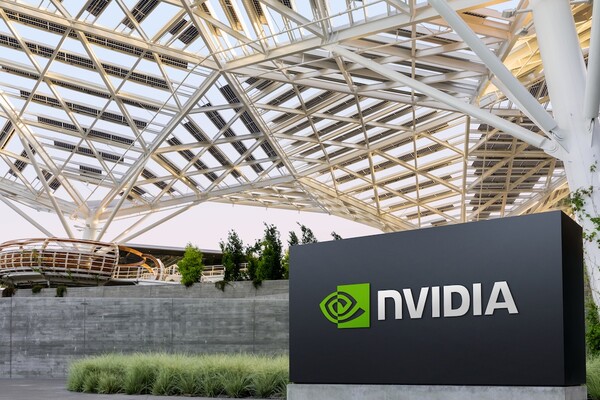
With Nvidia set to report earnings, market attention is shifting from this quarter’s figures to next-quarter guidance and messages from its new leadership. Nvidia’s founder and CEO Jensen Huang (젠슨 황) has resigned, and CFO Colette Kress (콜레트 크레스) is serving as interim CEO. An assessment says next-quarter margin guidance and messaging on management continuity will be used as a basis for judgment by South Korea’s memory industry, including Samsung Electronics and SK Hynix, as well as the stock market.
Nvidia will announce its third-quarter results on Nov. 18. The release will be the first earnings announcement held without Huang as CEO. Huang stepped down after admitting an extramarital relationship with an executive at a customer, Megaspeed, and reports later emerged of suspected extramarital relationships with executives who reported directly to him. The board appointed Kress as interim CEO and is working with an external firm to find a permanent successor.
With a leadership vacuum, what Kress says on the conference call has become a variable on the management side. Nvidia previously said on its August earnings call that supply bottlenecks would last until the end of fiscal 2028 and signalled full-scale mass production of its next-generation Vera Rubin platform. Whether the new leadership maintains that outlook and customer commitments is expected to affect management stability and the sustainability of customers’ businesses.
An assessment says an Nvidia earnings beat is already treated as the baseline, and the stock has reacted to next-quarter figures. In four announcements from November last year to August this year, results all exceeded market forecasts, but the stock fell on the day three times. The stock fell in February despite an increase in data centre revenue, and again in May despite record-high revenue and free cash flow. The stock rose only in August, up 8.7 percent, when Nvidia presented next-quarter revenue along with next year’s growth outlook.
As a result, next-quarter guidance, and gross margin in particular, has become the market’s biggest focus. Gross margin is the share of revenue left after subtracting costs, and it tends to shrink first when component prices rise. Nvidia cut its gross margin outlook for this quarter to 74 percent, plus or minus 0.5 percentage points, on its August earnings call, citing a shortage in memory supply, and said it expected the figure to fall to 71 to 72 percent by the end of this year.
It has become important whether Nvidia held around 74 percent this quarter and whether next-quarter guidance stays near 74 percent. If it maintains the 74 percent level, that would be a more positive outcome than Nvidia’s projected decline path.
The gross margin guidance also intersects with South Korea’s memory industry. Since Nvidia cited a memory supply shortage as the reason for lowering margins, a drop in next-quarter gross margin to 71 to 72 percent could be read as Nvidia absorbing rising memory prices. That would be a signal that memory suppliers’ pricing power is continuing.
If Nvidia holds the 74 percent level, it could mean it has passed cost burdens on through selling prices or that memory procurement conditions have improved. If the supply bottleneck outlook is maintained, it can be interpreted as meaning that memory demand continues to outstrip supply.
In addition, data centre revenue from China was under 1 percent in August, and questions have been raised over suspected chip exports, making Nvidia’s explanation of China sales another point to check. Nvidia recently warned in its proxy statement that a failure to establish an effective succession plan could hurt long-term performance, and CNN also pointed out that Nvidia lacked a talent pool and succession plan to replace Huang.
 Suk Dae-geon
d2dg@d-today.co.kr