
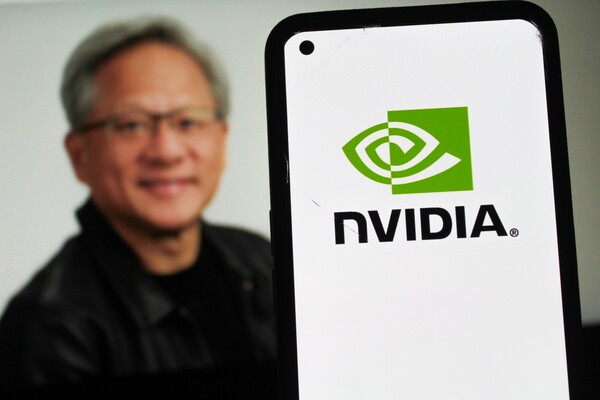
[DigitalToday reporter Jinju Hong] Nvidia will report quarterly results for the first time since Jensen Huang resigned. Market attention is focused not only on revenue and profitability but also on controversy over chip sales to China, how the company is responding to a management vacuum and the next leadership. It is also drawing attention because acting CEO Colette Kress, who has served as chief financial officer for a long time, will explain results and the business outlook in person for the first time.
According to IT outlet TechCrunch on Nov. 16 (local time), Kress is expected to face questions during the earnings release on key issues including Nvidia's financial performance, the direction of its China business and executive succession.
The biggest focus is what leadership structure the company will build after Huang's resignation. Huang is known as a figure who has been deeply involved across the company's management, with as many as 60 people reporting directly to him. The market is therefore watching whether Huang has fully stepped away from day-to-day management and whether there remains a possibility of a return.
Another point of interest is whether the board is pushing for Huang's return. Online, a petition calling for his return has emerged with more than 180,000 signatures. The company has not officially announced any plan for Huang to return or a succession process. How Kress sets out her position on Huang's role and the future management structure during the earnings release will be closely watched.
Chip sales to China and export controls are also key issues. Huang has argued for easing U.S. restrictions on semiconductor exports to China and has spoken to the effect that he has never seen evidence that Nvidia chips entered China through diversions via normal purchasing channels. In October 2025, however, it became known that Megaspeed, allegedly involving Alice Huang, a person linked to Huang, was investigated by U.S. authorities over suspicions it diverted Nvidia chips to China.
Nvidia's response related to Megaspeed is also expected to come under scrutiny. The company explained at the time that Megaspeed was legally using Nvidia chips on its cloud, but later said it voluntarily halted additional chip supplies to the firm starting in June 2025. The market is expected to demand a detailed explanation of how much Nvidia tracks final end-users of its semiconductors and how it manages distribution channels for chips subject to export controls.
Questions also remain over revenue in Singapore. Nvidia introduced Singapore last year as one of its fast-growing markets, and at the time Singapore accounted for 22 percent of total revenue in the second quarter. After suspicions linked to Megaspeed surfaced, the company changed its revenue tallying standard from the shipping destination to the location of customers' headquarters.
That has made it difficult to compare the scale of business reflected in Singapore revenue in the same way as in the past. The market is expected to examine the actual scale of Singapore-based cloud business, the impact of the disclosure change on financial information and the outlook for sales to China.
Whether its China strategy will change is also in focus. Huang previously argued that it would be difficult for the United States to block China from developing high-performance artificial intelligence models, and that it would be better to supply even relatively lower-performance Nvidia chips to China to maintain market dependence. In contrast, China hawks in the United States have countered that exporting advanced semiconductors could end up helping China's technological development.
After Huang stepped down, the key question is whether Kress will keep China business targets unchanged or adjust strategy in consideration of export regulations and geopolitical risks. How Nvidia approaches the China market is tied not only to its medium- and long-term revenue outlook but also to U.S. government export control policy.
Its stance on AI infrastructure investment is also under review. Kress has been cited as someone who took a cautious view, during her tenure as CFO, of Huang's aggressive AI-related deals and investment expansion. The market is watching whether large-scale investment and deals will continue, along with the impact of existing big contracts on the company's finances. The company's risk management and financial judgment on controversial contracts are also expected to be key questions.
Whether there will be governance restructuring also cannot be left out. How decision-making authority will be allocated after Huang's resignation and whether the board will strengthen oversight of management are emerging as standards for restoring corporate trust. It is also of interest whether a succession plan, including the appointment of a successor and decentralisation of authority, will be fleshed out.
This earnings release is expected to be the first test of whether Nvidia can maintain its existing growth strategy in Huang's absence. Beyond revenue and earnings guidance, explanations on transparency in the China business, risk management for AI investments and the next management structure are cited as key variables that will shape the market's assessment.
 Jinju Hong
hongjj@d-today.co.kr