
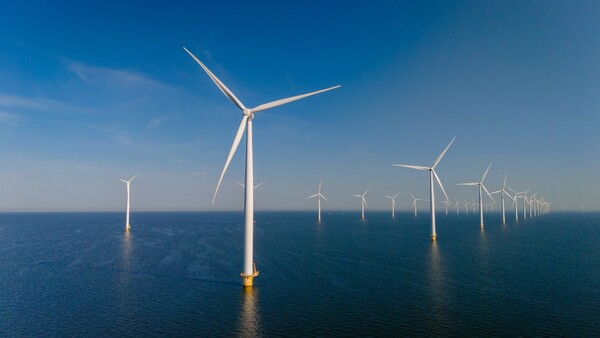
An analysis showed that combining wind power with solar generation and battery energy storage systems (ESS) can cut electricity supply costs by about 18 percent. Wind was found to fill gaps in solar output, reducing the need for battery storage capacity and backup generation facilities.
Electrek reported on Nov. 16 that UK energy think tank Ember, together with the Global Wind Energy Council (GWEC), released a report analysing the economics of solar, wind and batteries.
The researchers analysed hourly generation and power supply costs by region worldwide using weather data from 2015 to 2024.
The results showed the median cost of meeting 90 percent of electricity demand using only solar and batteries was $105 per megawatt hour (MWh), but fell to $86 when wind was added. That represents a 18.1 percent reduction.
When the remaining electricity demand is met with small-scale backup generation facilities, the median cost of the solar, wind and battery combination was analysed at $89 per MWh.
The key to the cost reduction is complementarity among power sources. Solar output varies with sunlight, but wind can generate power at night or in seasons with less sunlight, reducing reliance on batteries.
In the United States, the battery storage capacity needed to meet 90 percent of electricity demand fell to 12 hours from 20 hours, based on average power use. Europe also fell to the same level, and China dropped to 12 hours from 18 hours.
Areas able to supply low-cost renewable energy also expanded. With wind included, regions accounting for 75 percent of global electricity demand were able to meet 90 percent of demand at less than $100 per MWh. The share was 50 percent when only solar and batteries were used.
Complementary effects were also confirmed in situations where generation declines over long periods. Events in which solar output falls to less than half of the average for a week occurred about four times a year globally, but cases where wind also simultaneously fell into a low-output state occurred about once every four years.
The findings are also expected to affect new fossil fuel power investment. Coal and gas power facilities planned for construction worldwide total 845 gigawatts (GW).
The researchers analysed that 90 percent of them are located in regions where wind, solar and batteries can supply 90 percent of electricity demand at less than $100 per MWh. Excluding wind lowers the share to 71 percent.
The results, however, are based on a model analysis that assumes steady electricity demand and financing costs. The researchers said regional generation conditions and financing costs must be considered, but stressed that combining wind and solar is an important means of improving the economics of renewable energy.
 Choi Jae-won
ittt_0801@d-today.co.kr